Tailor-Made Clothing in Vietnam: Is It Sustainable?
This post and the photos within it may contain affiliate links. If you purchase something through the link, I may receive a commission at no extra charge to you.
First time in Vietnam, I was blown away by all the tailor shops, especially in Hoi An, where you can get custom-made trousers, shirts, dresses, and even full suits within a day or two.
The appeal is clear: affordable prices, a perfect fit, and a fun travel experience. But how does tailor-made clothing actually compare to buying from big fashion brands… and is it a sustainable choice, or does it just feel like one?
I’ve now been to Hoi An twice, and the gap between those trips gave me a lot of insights.
So in this post, I’ll break down the environmental impact, ethical considerations, and cost of getting custom clothing in Vietnam, plus other things based on my experience.

First, some context on fast fashion
The fashion industry is responsible for around 10% of global carbon emissions. Doesn’t sound much? It’s more than international flights and maritime shipping combined.
If current trends continue, that figure could jump to 26% by 2050.
The US alone generated 17 million tons of textile waste in 2018, with 11.3 million tons ending up in landfills. That’s roughly 80 pounds of textile waste per person per year… about the weight of a fully packed large suitcase, thrown away every single year.
Globally, the fashion industry produces around 92 million tonnes of textile waste annually, expected to reach 134 million tonnes by 2030. And only about 1% of clothing is ever recycled into new garments.
And let’s not forget about the microplastics: every time a synthetic garment is washed, it sheds fibres. A study published in Nature Communications found that synthetic fibres make up 92% of microplastic pollution in Arctic seawater, with polyester (the main material in fast fashion) accounting for 73% of those fibres.
An average household in the US or Canada releases over 500 million fibres per year just from doing laundry.
OK, final thing, have you ever heard of the Atacama Desert in Chile? It’s one of the driest places on Earth, and it has become a dumping ground for fast fashion’s leftovers. We’re talking mountains of unsold clothing – all just sitting in the middle of the desert.
Sustainable fashion isn’t black and white
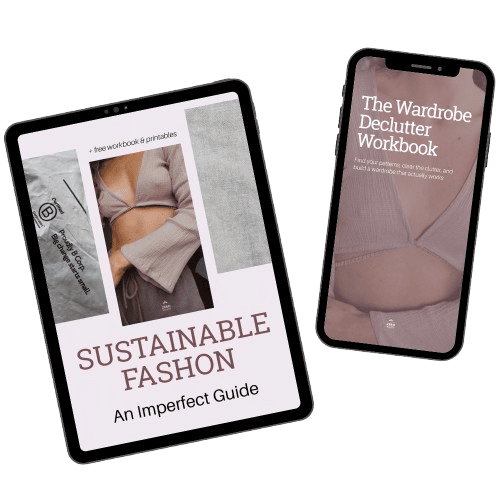
But some choices are better than others, and I’ve spent 8 years figuring it out. Sustainable Fashion: An Imperfect Guide is all I learned: how to build a wardrobe you actually love, what materials and certifications to look for, how to shop second-hand, how to spot greenwashing, which brands to trust & which to avoid.
Workbook & printables included · Instant PDF download · $14
Getting tailor-made clothes in Hoi An: My experience
The first time
I spent over three weeks in Hoi An on my first trip, and the tailor shops are everywhere, ready to create anything you could imagine.
I had an idea for a pair of pants, so I found a tailor and showed her some images. I chose the fabric (cotton), and the next day my pants were ready. They weren’t exactly as I imagined, so we made some adjustments, and they looked a bit closer to what I wanted.
Then, my partner and I headed to the big tailoring hall. It was overwhelming at first (they approach you from everywhere), but after browsing for a bit, we found Ngô Thị Thu, a cheeky tailor lady.
My partner had an idea for a pair of pants, so we discussed the design, picked out colors and fabrics (linen), and agreed on the details. The next day, the pants were ready. They ended up great, so he ordered 2 more pairs. I decided to make two pairs like the one I had in mind, just to see if she’ll do a better job than the 1st tailor.
At first, I liked what she made. But here’s what happened next: a few months later, the pants I thought I was happier with (the ones from the second tailor) had stretched and gone baggy. Not unwearably so, but they’d become what I can describe as comfy pyjamas. I kept wearing them, but the fit was off, so I decided to give them to my granny.
The first tailor’s work held up better, even though it needed more adjustments. That detail matters for sustainability, and I’ll come back to why.

The second time
I came back to Hoi An a year after the first trip. This time, I went to the 1st tailor and brought a sample of the exact pair of pants I wanted. That changed everything. With a physical reference, she could see exactly what I meant, and the result was much better. I also had her make a flowy skirt, which came out great.
My partner went back to his tailor, the one who’d made my baggy pants, since his linen pants from the first trip kept well, and he wanted some more. She remembered us and was genuinely happy to see us. We brought a dragon-print fabric we’d found at a separate shop, and she used it to make more linen pants.
The sustainability breakdown
1. Environmental impact: better than fast fashion, but not the perfect sustainability solution
Made-to-order clothing removes one of fast fashion’s biggest problems: overproduction.
You also get to choose your fabric. Opting for linen, cotton, or bamboo instead of polyester means no microplastic shedding every time you wash it.
But here’s the thing… the fabrics in those tailor shops came from somewhere, and most tailors can’t tell you where. The fabric on those shelves could have traveled through the same chemical-heavy dyeing facilities and fossil-fuel-intensive production processes. You just don’t know, and unlike certified sustainable brands, there’s no third-party audit requiring them to disclose it.
The other environmental factor is that a garment you stop wearing is waste, regardless of how it was made. My baggy pants from the second tailor were technically custom, made-to-order, and they still ended up as an item I’ll give away after a year.
Longevity matters for sustainability, and quality varies significantly between tailors.
Tailor-made clothing in Vietnam is probably better for the environment than fast fashion, and worse than a certified sustainable brand with traceable supply chains.
The gap between those two endpoints is large, and where tailor-made sits depends almost entirely on which tailor you find, what fabric you choose, and whether the piece actually fits well enough that you’ll wear it for years.

2. Ethics: more transparent, but not perfect
The ethical case for tailor shops is stronger than the environmental one. When I pay Ngô Thị Thu directly, I know where my money goes.
She sets her prices, works in her shop, and is not being squeezed by a brand’s production quotas. That’s a different relationship than buying from a global brand whose supply chain is hidden behind a glossy marketing page.
Not every shop in Hoi An operates this way, though. Some outsource to larger factories. It’s worth asking directly: who makes the clothes, and where?
3. Cost: affordable, but there are conditions
Tailor-made clothing in Hoi An is affordable. I paid around $20–$30 per pair of custom-tailored pants; something that would easily cost $100 or more from a European brand.
However, pricing isn’t fixed, especially in touristy areas, and some tailors will overcharge visitors. What I did was visit multiple shops to compare prices before committing to anyone. And if you’re ordering multiple pieces, there’s usually room to negotiate a discount.
One thing I learned the hard way: cheap and well-fitting don’t mean much if the fabric doesn’t hold up. Factor longevity into the value; it matters more than the price tag.

Pros and cons
Pros:
- Made-to-order reduces overproduction waste. Unlike fast fashion, nothing sits unsold in a warehouse.
- You can choose natural fabrics. Linen, cotton, and bamboo are available, and avoiding polyester matters for microplastic pollution.
- Supports small tailors directly, assuming the work happens in-shop. The local tailor model is ethically better than factory supply chains.
- Affordable, especially compared to equivalent pieces from sustainable brands.
- The experience itself is fun, choosing every detail, building a relationship with your tailor, etc. Since we went back to the same tailor multiple times (my partner also made a few different pairs of pants with her), we were making jokes with her in the end, which made the whole process feel more personal and enjoyable.
Cons:
- Sustainable materials are hard to find without effort. Organic cotton, recycled fabrics, and deadstock materials exist, but require actively searching for them.
- No supply chain transparency. Most tailors can’t tell you where their fabrics were produced, dyed, or finished.
- Quality varies enormously between tailors. A poorly-made piece that you stop wearing after a year is still a waste, regardless of how it was produced.
- Some shops outsource to factories. The charming storefront doesn’t guarantee the stitching happened there.
- Getting good results requires effort. Bring reference photos or, better, a sample garment. Be precise. Misunderstandings waste fabric and money.

Tips to make it more sustainable
Bring old clothes for repair or upcycling. My partner brought a bag with a broken zipper and got it fixed. He also had adjustments made to a pair of linen pants. Repair is more sustainable than buying new, always.
Choose natural and sustainable fabrics. Avoid polyester. Linen, organic cotton, hemp, silk, and bamboo are all better options. I found bamboo-cotton blends available in Hoi An; they exist, but you may have to look. Checking fabric markets before going to the tailor gives you more control.
Bring your own fabric if you want to control sourcing. We found a dragon-print fabric we loved at a separate shop and brought it to the tailor to use. This is a great way to ensure you’re getting something you’ve chosen carefully.
Ask about deadstock. Some tailors have leftover fabric from previous projects that would otherwise go to waste. Using it reduces textile waste and often costs less. Our tailor gave us the leftover fabric from our orders, and we used it to make small things like scrunchies and headbands.
Prioritise fit above everything. A piece that fits perfectly is one you’ll wear for years. Don’t accept something almost right; ask for adjustments, or go to a different tailor. My second visit produced better results, specifically because I brought a sample and could show exactly what I wanted.
Choose timeless, versatile designs. A well-made pair of linen trousers in a classic cut will outlast a trendy piece by years. That longevity is a sustainability choice.
Think about repairability. Simple closures, sturdy stitching, classic construction; these make future repairs easier. Avoid complicated embellishments that can’t be replaced.

Was it worth it?
Getting clothes tailored in Hoi An is a good experience, and if you approach it thoughtfully, you can come away with pieces that last and that you actually love. The second trip was better than the first in almost every way, mostly because I knew what I was doing.
From a sustainability standpoint, the honest assessment is: tailor-made clothing is better than fast fashion, primarily because it eliminates overproduction and gives you control over materials.
But it’s not a sustainability solution on its own. The fabric sourcing is often untraceable, quality is inconsistent, and a garment that falls apart after a year is no better for the planet than something you bought on sale at H&M.
If sustainability and full supply chain traceability are your absolute priorities, a certified eco-brand is probably the safer choice. But if you’re in Vietnam, willing to do a bit of research, and want a more intentional way to refresh your wardrobe while supporting local tailors, it’s worth looking into.
Just go in with realistic expectations, ask the right questions, and bring a sample if you can.
FAQ
How do I find a good tailor in Vietnam?
Check online reviews, ask to see samples of their work, and pay attention to how they communicate. A good tailor will listen to your requests, offer suggestions, and take precise measurements. If possible, ask other travelers or expats for recommendations.
Also, not all tailors speak fluent English, so it’s important to explain everything clearly. Be precise about the fit, fabric, and details you want. Repeat key points to avoid misunderstandings, and if possible, bring reference photos.
What if I don’t like how my clothes turn out?
Not every tailor will get it right on the first try. I had a tailor make a pair of pants that didn’t turn out as expected, so I had to ask her to make some changes before taking them. If you have a sample, that would work best.
Can I bring my own fabric to a tailor?
Yes! If you find fabric elsewhere, most tailors will be happy to use it. This is a great way to ensure you’re getting eco-friendly materials while still enjoying a custom fit. We actually found a great tailor, but she didn’t have the exact pattern we wanted, so we went looking for the right fabric and then brought it back to her so she could use it for our pants.
What if I want to recreate a piece of clothing I already own?
Easy! My partner and I did that. You can bring the item to the tailor, and they can copy it – sometimes even improving the fit. You can also request small modifications, like changing the length or adding pockets.
Do I need to negotiate prices?
Yep. While some tailors have fixed prices, in more touristy areas such as Hoi An, there’s room to negotiate. And if you’re ordering multiple pieces, you might be able to get a discount.

Final thoughts
Sustainable fashion isn’t black and white. And getting clothes tailored in Vietnam is a good example of that. It’s better than the fast fashion default, messier than the certified sustainable ideal, and more personal than either.
Ultimately, it depends on what matters most to you. If sustainability and traceability are your biggest priorities, an eco-friendly brand is probably the best choice.
If that’s not realistic for your budget right now, tailor-made clothing in Vietnam is a solid middle ground: more intentional than fast fashion, more personal than anything you’ll find on a rack, and better for the people making the clothes.
Related content:



I’ve had some really great experiences getting clothes tailored in Vietnam. As you say the fabric can’t be traced with sustainability credentials, but getting custom made, small batch clothing is almost always more sustainable! Thanks for sharing the tips!