DIY Oil Perfume with Essential Oils (Natural & Customisable)
This post and the photos within it may contain affiliate links. If you purchase something through the link, I may receive a commission at no extra charge to you.
Homemade oil perfumes are one of the easiest ways to create a natural, personalised fragrance at home.
They don’t require alcohol, they’re simple to make in small batches, and they develop more slowly on the skin than spray perfumes.
When I was researching on how to make a DIY oil perfume something stood out to me: many recipes using 20-30% essential oils.
I get it – these blends can smell strong and nice. However, they’re not always the best choice for your skin. High concentrations of essential oils can increase the risk of irritation, sensitivity, or discomfort over time and with regular use.
For this DIY perfume, I stay lower than that range and use around 10% essential oils (which is still on the higher end), aiming for a blend that’s clearly noticeable, long-lasting, and still safe for your skin.
In this article, I share about:
Why oil-based perfumes?
I stopped using conventional perfumes a bit after I started getting more curious about sustainable living and zero waste, so probably about 6 years ago. At some point, it stopped making sense to me to use something that felt overly artificial and chemically intense directly on my skin.
Once I stepped away from strong commercial perfumes, I started noticing how incredibly intense they are. Heavy scents are way too overwhelming and even make me feel sick, especially in closed spaces like public transport. It often feels intrusive and unnecessary, rather than nice.
That shift is what pushed me toward learning more about homemade oil perfumes. After experimenting and making a few different ones, I figured they’re a much better option because:
- feel softer and less sharp than alcohol-based perfumes
- evaporate slowly, so the scent unfolds gradually
- it’s easy to customise and adjust
- work well for small, low-waste batches
I usually use almond oil or jojoba oil as a base. Both are lightweight, stable, and have little to no scent of their own, which lets the essential oils shine.
Other carrier oils that can work well for this oil perfume recipe include grapeseed oil, safflower oil, apricot kernel oil, and sunflower oil.
Understanding perfume notes
Not all essential oils are equal in strength. Some oils are naturally more intense on the skin, which is why certain scents work better as accents rather than main notes.
Perfumes are usually built using three layers of scent, which influence how the fragrance develops over time.
Top notes are the first impression. They’re fresh, bright, and evaporate quickly. Common top notes include:
- Citrus oils (lemon, sweet orange, bergamot, grapefruit)
- Mint (peppermint, spearmint)
- Eucalyptus
- Lemongrass
- Light herbs like basil
Middle notes, also called heart notes, form the body of the perfume. They appear once the top notes soften and help balance the blend. Common middle notes include:
- Lavender
- Rosemary
- Geranium
- Sage
- Chamomile
- Jasmine
- Ylang-ylang
Base notes are deeper and longer-lasting. They anchor the perfume and help it linger on the skin. Common base notes include:
- Vanilla
- Sandalwood
- Cedarwood
- Vetiver
- Patchouli
- Clove (used sparingly)
A note on citrus essential oils
Citrus essential oils such as sweet orange, lemon, bergamot, lime, and grapefruit are considered photosensitive.
This means they can increase the skin’s sensitivity to sunlight. Reactions don’t always happen immediately and may develop with repeated exposure.
To use citrus oils more comfortably:
- keep them as a smaller part of the blend
- avoid applying to areas exposed to strong sunlight
- or reserve citrus-forward perfumes for evening use
Citrus oils aren’t unsafe, but they do benefit from a bit of extra awareness.
DIY oil perfume with essential oils
This recipe makes one 9 ml perfume.
You’ll need:
- 9 ml carrier oil (almond or jojoba)
- 18 drops of essential oils total:
top notes: 20% → 4 drops, middle notes: 40% → 7 drops, base notes: 40% → 7 drops - 1 drop vitamin E (optional)
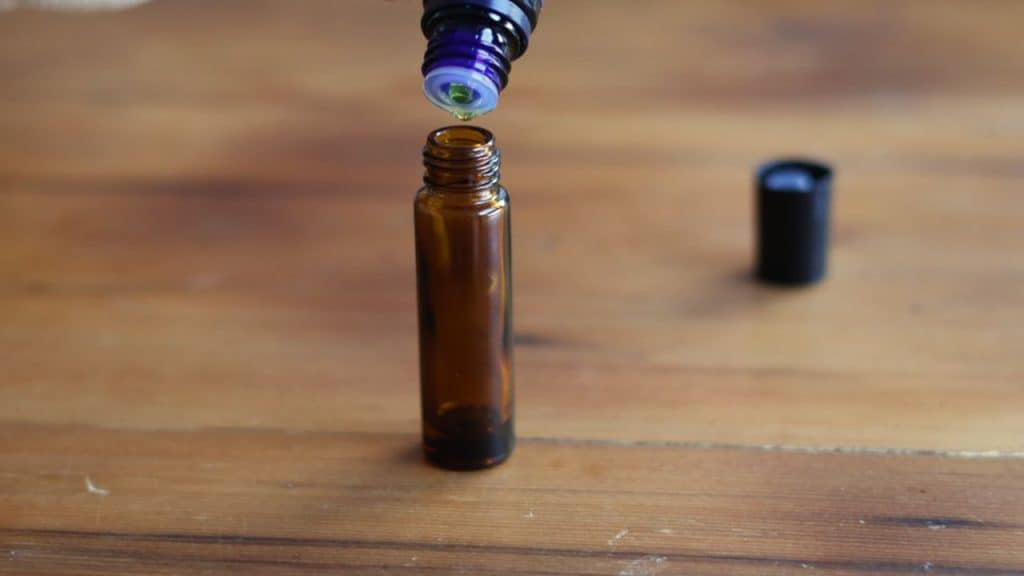
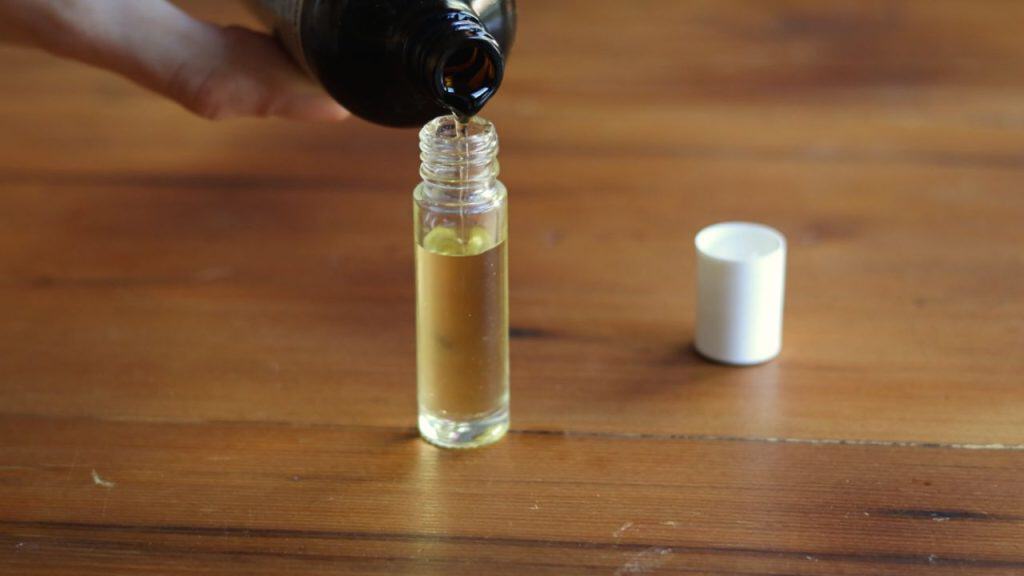
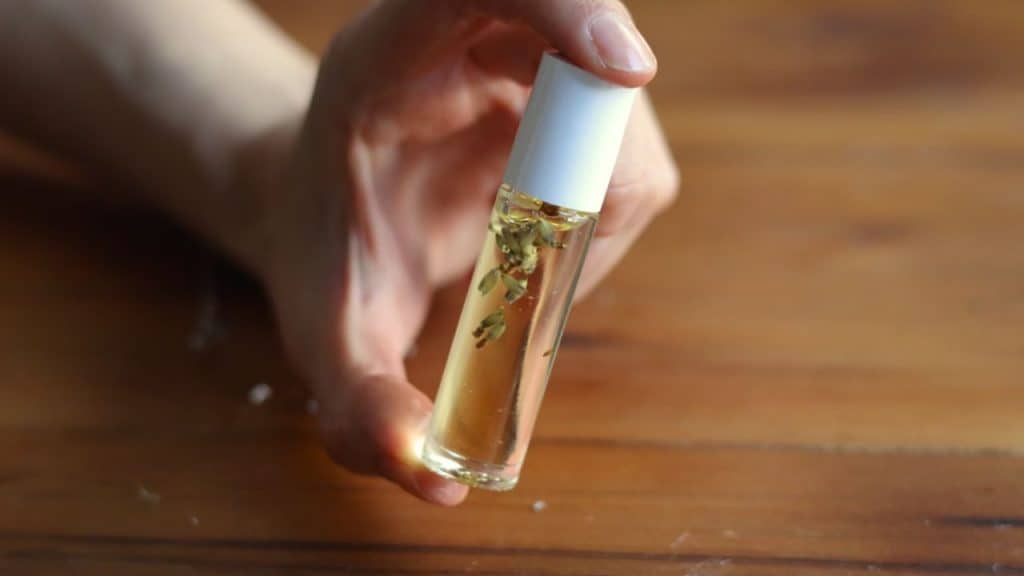
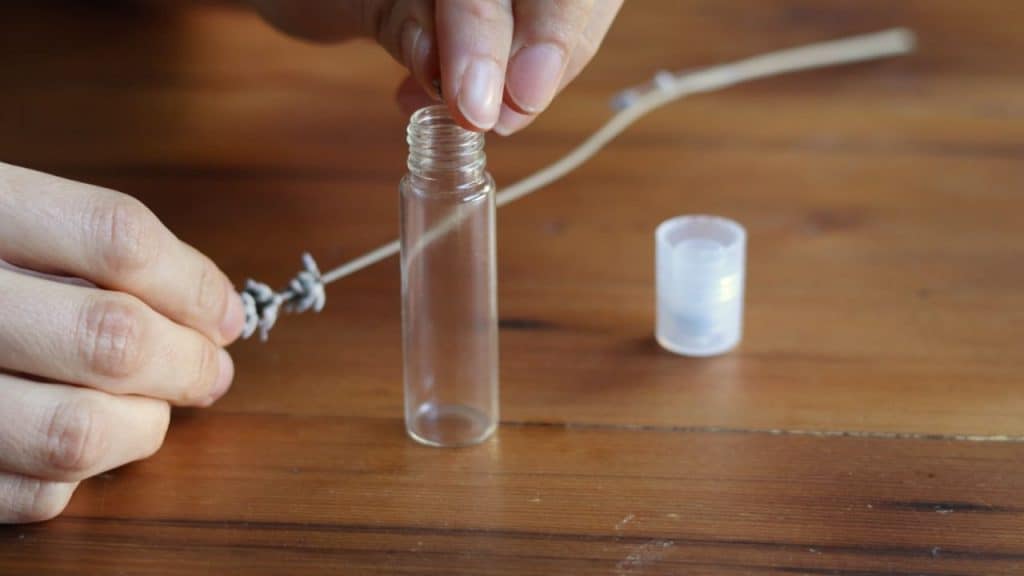
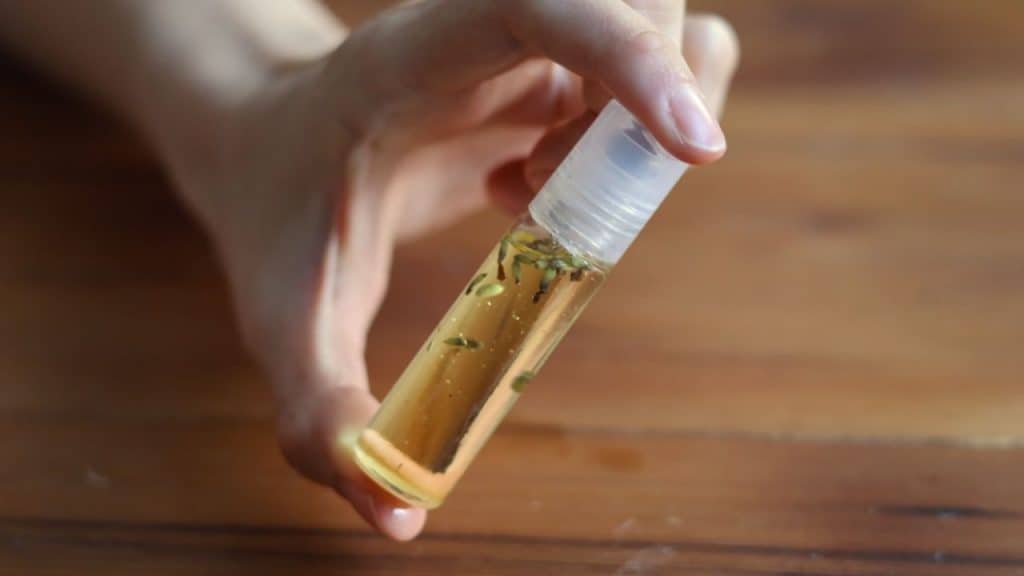
Add the essential oils to a clean glass bottle first, then fill the rest of the bottle with carrier oil. Close and gently roll the bottle between your hands to combine. Let the perfume rest for 24-48 hours before using so the scent can settle.
Scent families & exact blends
As a general guideline, classic perfumes often follow a structure of around 15-25% top notes, 40% middle notes, and 35-45% base notes. Some of the blends below follow this structure closely, while others are intentionally middle- or top-note focused to create a fresher, more linear scent. Each blend below uses 18 drops total per 9 ml bottle.
Herbal & fresh oil perfume
Clean and calming. It creates a SUPER fresh herbal scent with a soft, warm finish:
Middle notes:
- Lavender: 8 drops
- Rosemary: 6 drops
- Sweet orange: 2 drops
- Vanilla: 2 drops
Sweet & warm oil perfume
Comforting, gentle, and close to the skin.
- Vanilla: 8 drops
- Lavender: 6 drops
- Sweet orange: 2 drops
- Clove: 2 drops
Fresh & uplifting oil perfume
Bright and energising without being sharp. This blend opens fresh and settles into something balanced and smooth:
- Sweet orange: 6 drops
- Lavender: 5 drops
- Rosemary: 4 drops
- Vanilla: 3 drops
Minty & energising oil perfume
Cooling and very noticeable. Peppermint is powerful, so a small amount goes a long way:
- Lavender: 7 drops
- Rosemary: 5 drops
- Peppermint: 2 drops
- Vanilla: 4 drops
How to apply homemade oil perfume
Apply a small amount to pulse points such as:
- wrists
- inner elbows
- behind the ears
Start with less than you think you need. The oil perfume recipe is concentrated and continue to develop on your skin over time.
Patch testing
Before applying your perfume more generously, do a patch test.
Apply a small amount to the inside of your elbow or wrist and leave it on for 24 hours. Watch for redness, itching, warmth, or irritation.
If your skin reacts, don’t use the blend on larger areas. If everything feels fine, you can gradually adjust how much you apply.
This is especially important when:
- trying a new essential oil
- using stronger blends
- wearing the perfume repeatedly
Storage & shelf life
Store oil perfumes in a cool, dark place, away from direct sunlight and heat. Dark glass bottles work best, especially for blends that contain citrus oils.
Most oil-based perfumes stay fresh for 6–12 months, depending on the carrier oil, storage conditions, and how often the bottle is opened.
If the scent starts to smell sour, sharp, or noticeably different, it’s best to stop using it.
A quick note on artificial fragrances
In many commercial perfumes, “fragrance” or “parfum” is all you can see, but often, it means they’ve used a blend of possibly hundreds of synthetic chemicals.
Companies aren’t required to fully disclose on labels. Isn’t that crazy? These ingredients are designed to smell ‘good’ but they can also interact with your skin negatively.
Research has shown that fragrance ingredients are among the most common causes of skin irritation and contact dermatitis, and can trigger sensitivity, redness, itching, and allergic reactions, even in people who don’t consider their skin “sensitive.”
Another issue is cumulative exposure. Skin reactions don’t always appear immediately. Repeated daily contact with fragranced products can gradually weaken the skin barrier or lead to sensitisation over time, which is why some people suddenly react to products they’ve used for years without problems.
With DIY oil perfumes, you know exactly what’s in your perfume, you can keep the ingredient list short, and you can adjust it based on how your skin responds. It’s the best and easiest way to switch from artificial fragranced products and switch to simple, natural blends.
About fragrance oils
Fragrance oils are manufactured scent blends, often made from aroma compounds that can be synthetic or nature-identical. They behave differently from essential oils, so when using fragrance oils:
- check the manufacturer’s skin-use and dilution guidelines
- use them in small amounts
- don’t assume they can replace essential oils drop-for-drop
In this DIY perfume, I did use vanilla fragrance oil, since true vanilla essential oil is very rare to find and very expensive. Most vanilla scents (even in “natural” products) come from vanilla fragrance oils rather than essential oils.
If you’d rather avoid fragrance oils completely, you can simply leave vanilla out and build your perfume using only pure essential oils. The blends will still work well – they’ll just have a different scent profile. And if you’d prefer a more natural alternative to vanilla, you can experiment with:
- Benzoin resin – a natural tree resin with a warm, sweet, vanilla-like scent, and is usually sold as a resin or pre-diluted extract; it’s used in very small amounts as a base note
- Tonka bean absolute – a natural extract with a cozy, sweet aroma often compared to vanilla or almond; it’s stronger, so only a drop or two is needed to add depth
- Vanilla-infused carrier oil – made by slowly infusing real vanilla pods in a neutral carrier oil; easy to DIY at home, gentle on the skin, and adds a soft, natural vanilla note
These won’t smell identical to vanilla, but they create a similar soft, comforting base.
FAQ
Can I make this perfume stronger?
You can adjust blends slightly, but increasing strength isn’t always better. Balance and note selection often make more difference than adding more drops.
How long should I wait before using the perfume?
At least 24 hours. The scent usually improves after 48 hours.
Why does my perfume smell different after a few days?
Essential oils continue to blend and mellow over time. This is normal and often improves the scent.
Can I apply this to clothing?
You can, but always test first. Oils may stain delicate fabrics.
Final thoughts
Perfume doesn’t have to be overpowering to be enjoyable. Especially with oil-based perfumes, the scent is meant to sit closer to the skin, unfold slowly, and feel personal rather than announcing itself from across the room.
A good oil perfume recipe doesn’t need to leave a heavy cloud behind you to be effective; it’s often the softer, more balanced blends that feel the most wearable and intentional.
If you’re used to very strong perfumes, it can take a little time to adjust, and an essential oil perfume may feel subtle at first.
But DIY oil perfume is less about intensity and more about finding what feels right for you, and gently moving away from commercial fragrances that rely on sharp, artificial notes rather that just don’t belong on your skin.