
Wardrobe Declutter: 7 Steps to Build a Wardrobe You Love
This post and the photos within it may contain affiliate links. If you purchase something through the link, I may receive a commission at no extra charge to you.
I used to stand in front of a closet full of clothes, feeling like I had absolutely nothing to wear.
It took me a while to figure out why. It turned out that I was buying individual pieces, not outfits. A cute top here, a nice jacket there… and then getting home to find nothing actually worked together.
I also had a chronic weakness for cute-but-impractical cold-weather pieces that always looked better in the shop than they worked in real life.
I figured that no matter if it’s a second-hand piece or one from a sustainable brand, it didn’t matter. If it sits unworn in your wardrobe, it’s not sustainable.
That’s what finally pushed me to do my first proper declutter. I counted 85 items and set a goal of cutting it roughly in half; back then, I was pretty fixated on getting to a small, minimal number.
I didn’t quite get there, but somewhere along the way I realised the number wasn’t really the point.
What I actually wanted was a wardrobe I enjoyed getting dressed from: one where everything worked, nothing was sitting there out of guilt, and I understood the patterns that had made it a mess in the first place.
(A quick note before we start: this was my first proper declutter, done back in 2021. I’m sharing it because the process helped me – not because I’ve had a perfectly minimal wardrobe ever since. More on that at the end.)
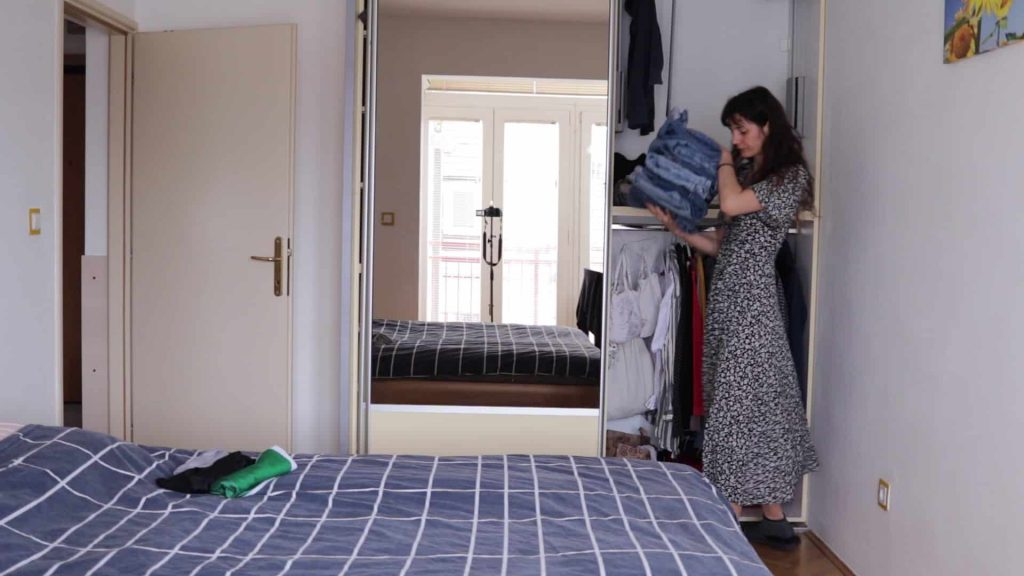
Before you start: shift how you think about your wardrobe
The biggest mindset shift for me was learning to think in outfits, not individual pieces. This sounds obvious, but it’s hard to do in the moment when you’re holding something you like.
Try to imagine at least 3 outfits you can make with the specific item you’re looking to buy. If you can’t answer that clearly, it probably doesn’t belong.
Figure out your patterns
Before you touch a single item, it’s worth spending a few minutes thinking about why your wardrobe got to this point.
For me, the patterns were pretty specific once I named them.
Years ago, before being interested in eco-friendly living, I was shopping because I was bored, or because it was what my friends and I did together for fun.
Then, as mentioned earlier, I was buying individual pieces that didn’t work together, or just cute but impractical pieces that weren’t comfortable and didn’t work in real life.
Yours might be different. Maybe you buy for occasions that never happen, maybe you have a weakness for a particular category (like shoes or knitwear), or perhaps you buy things because they were on a great deal, not because you truly need them.
Worth naming before you start, because the point of a declutter isn’t just to clear out what’s there now. It’s to get better at understanding what gets in.
When you go through your donation pile at the end, you’ll probably see the pattern staring back at you.
The 7-step ruthless wardrobe declutter
1. Count everything and set a target
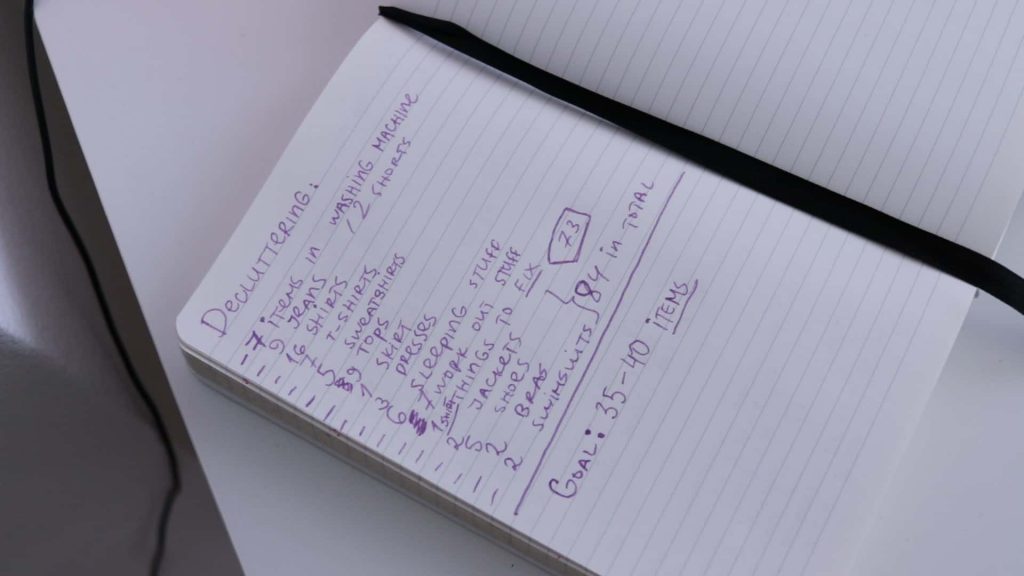
Before you touch anything, count it. Everything – shoes, pajamas, swimwear, bras, coats in storage, the things you’ve shoved at the back and forgotten. I counted 85 items and was genuinely surprised. I thought 85 items were quite a lot, and the worst part was that a lot of it was unworn.
Then set a rough target. Mine was to half it, so around 40-43 items. It’s fine if you don’t hit it exactly; I didn’t, I landed on 49, but having a number kept me honest when I was tempted to keep things “just in case.”
2. Take everything out & sort
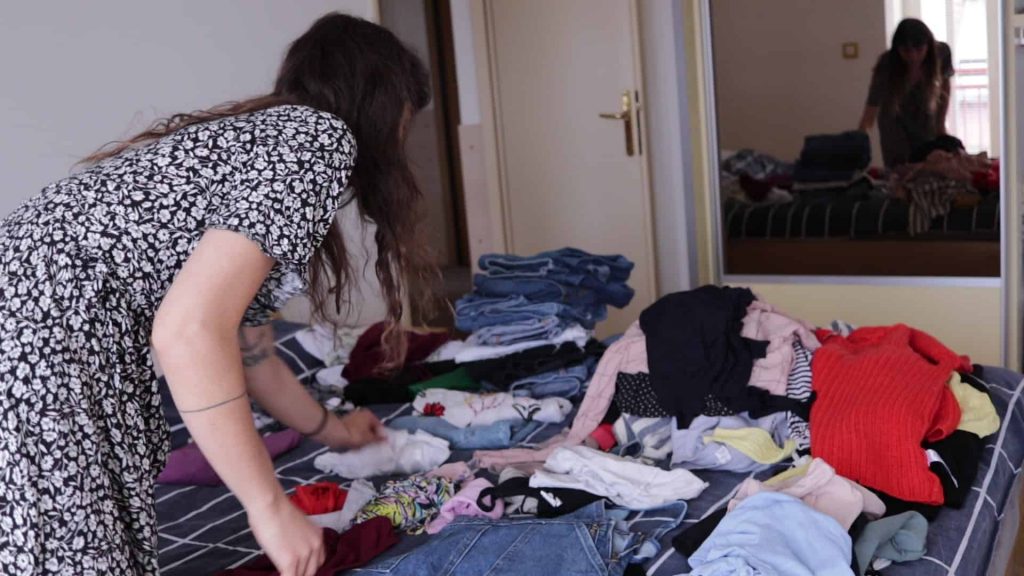
Pull everything out and lay it where you can see it all at once. Not just the main rail… the drawer, the storage bin, the bag on top of the wardrobe.
Then, group similar items together before you start making decisions. It’s much easier to be ruthless about your 4th jumper when they’re all in a pile in front of you. Categories to work through:
- Shoes and accessories
- T-shirts and tops
- Jackets and coats
- Dresses and skirts
- Trousers and jeans
- Knitwear and heavier layers
- Workout clothes
- Sleepwear
3. Try everything on and take photos
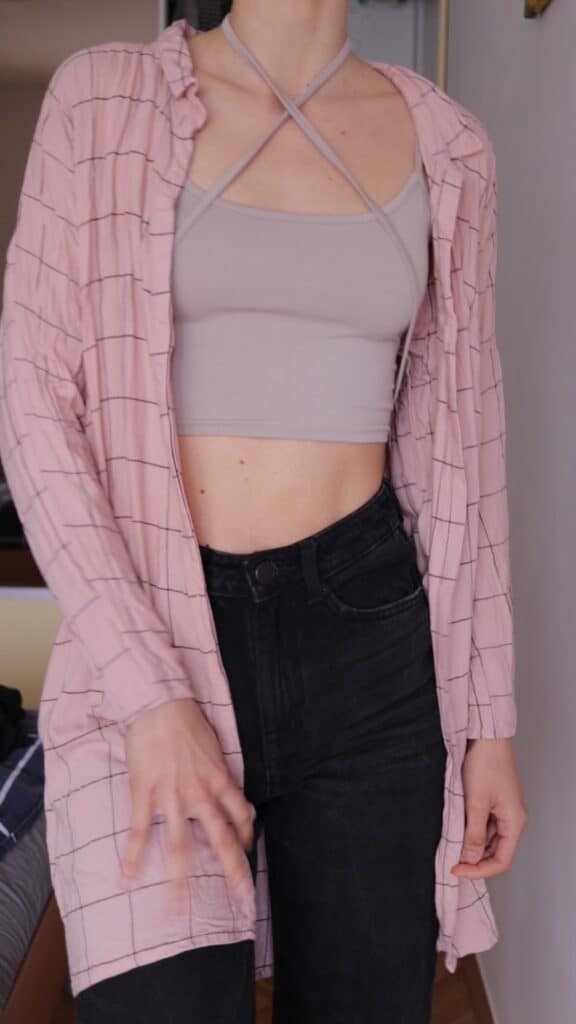
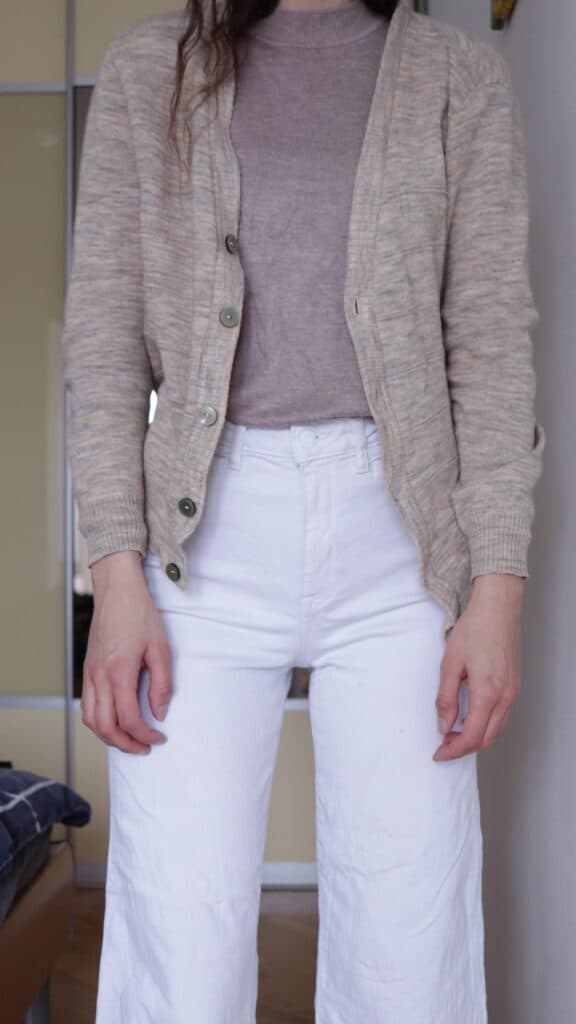
This is the step people skip, and it’s the most important for me. Something that looks fine on a hanger can feel completely wrong on your body, or vice versa. Try it on. Take a photo or a short video. The camera is more objective than the mirror and significantly more honest than your memory of how something used to fit.
4. Sort into four piles
Every item gets assigned to one of these:
- Get rid of: Stained, damaged, or genuinely beyond use.
- Keep: You love it, you wear it, and it works with other things you own.
- Maybe: You’re genuinely unsure. Set these aside and come back.
- Donate or sell: Good condition, but no longer yours.
5. Be ruthless with the “get rid of” pile
Some prompts that helped me be honest with myself:
- Does this fit my actual daily life, not the life I imagine I might have one day?
- Is this the “cute but completely impractical” category?
- Do I already have something I wear more that does the same job?
- Have I actually worn this in the last year?
- Does this piece fit with other items in my wardrobe, or not?

6. Handle the “maybe” pile properly
For anything you genuinely can’t decide on, box it up and put it somewhere out of sight for three months. If you don’t go looking for it, you don’t need it.
This isn’t a trick. It actually works because absence removes the emotional charge of the item and makes the decision obvious.
If you’re still stuck, ask: Can I make three actual outfits with this, using things I already own and will keep? If the answer requires imagination rather than certainty, that’s a no.
7. Put it back in a way that makes sense
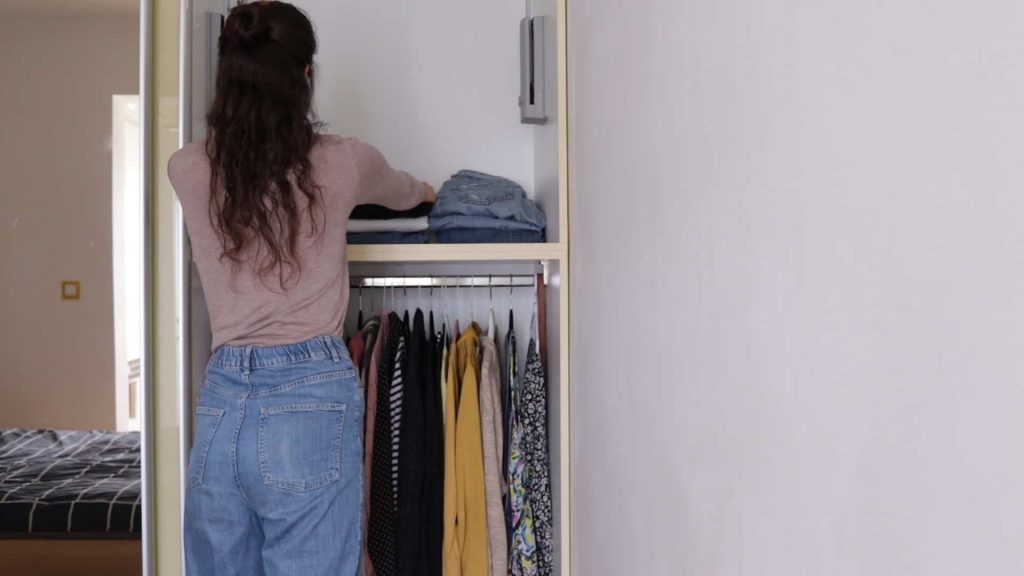
Once you’ve cleared the clutter, take a few minutes to organise what’s left in a way that actually reflects how you get dressed.
Group by type, by colour, by season; whatever means you can see everything at a glance and find what you’re looking for without digging.

All of the clothes I got rid of (36 items in total)
What happened when I did this
I got rid of 36 items and ended up with 49. Not the 40-43 I’d aimed for, but close enough to feel the difference immediately. Getting dressed became noticeably faster and less frustrating because the items I had left were something I’d actually wear. I donated the rest of the items in a local second-hand store, where they resell second-hand clothes.
At the time, I was hoping to land on some impressively small number. Now I care less about the number and more about whether what’s there actually gets worn. That shift made a bigger difference than the declutter itself.
I’m not going to pretend I’ve got it completely figured out. My wardrobe is a constant work in progress.
But I’m much more aware of my patterns now, which helps me to stop and think for a moment before buying anything.
How to keep it this way
- Notice what you reach for. After a few weeks, you’ll have a clear picture of what your wardrobe actually is (vs. what you thought it was).
- Shop with your wardrobe in mind, not in isolation. Identify the gaps first, then look for things to fill them.
- Wait before buying. A few days between seeing something and buying it filters out most impulse purchases.
- Check secondhand first. It’s better for the planet and better for your budget; just apply the same outfit-thinking test before buying.
- Declutter between seasons. The transition point is a natural moment to reassess what worked and what didn’t.
A few extra things worth knowing
- Upcycle or recycle what you can’t donate. Old, worn-out clothes can become cleaning rags, produce bags, or stuffing. Only about 1% of clothes are actually recycled into new garments, so every other option is better than landfill.
- Sell what’s in good condition. It’s worth the effort, and it extends the life of the item. Here is a list of 20+ places to sell online.
- Gift or swap with others. Give clothes to friends or family, or organize a clothing swap with others to refresh your wardrobe sustainably.
- Let go of the guilt. Keeping something because it was expensive or a gift doesn’t make it useful. The money is already spent.
- Look at patterns in what you’re donating. This is genuinely useful. If you keep getting rid of the same type of thing, like impulse buys, “cute but impractical” pieces, things you bought for occasions that never happened, that’s information about your shopping habits, not just your wardrobe.
- Decluttering is not final. You’ll find more to let go of next time. And you might end up getting more stuff and having more items again (this is what happened to me). It’s a process, and it’s just how it goes.
Final thoughts
You don’t have to go full minimalist. The goal isn’t to have as little as possible; it’s to have a wardrobe you actually love, where getting dressed doesn’t feel like a chore. No strict rules or hitting an exact number.
It takes some effort, and it’s not always fun. But it’s better than starting every morning frustrated in front of a closet full of things you don’t actually want to wear.
And nothing is final. You’ll probably accumulate more stuff and need to do it again at some point. That’s just how it goes.
But each time around, you’ll get a little better at knowing what you actually love, what fits your life, and what patterns to watch out for.
Would love to hear if you have your own tips on decluttering your wardrobe – so feel free to share all your tricks in the comments below. 🙂




In the chapter “Analyze the items you give away”, I would add the clothes that I received from my mother, since they are small for her, but at the beginning I agreed to take, and then I realized that this was not to my taste; more clothes that I brought from the market second-hand. That is, clothes that I did not buy, but received. It looks like the closet is full of clothes. But the worst thing is that I can not make a final decision and at least change something. I do not wear these clothes, but the voice of doubt is stronger than the voice of reason. Thank you for your work . today I started listening to your book ” project 333 ” in russian language. ❤🙏👍
in fact, I wanted to write something special and interesting, but it turned out as always. I’m sorry, maybe next time I’ll be able to write a decent comment. I wish you good mood and good luck 🤦🏼♀️🌺🥰
Hi Sveta. The tip you shares was good, thank you for your comments! 🙂