Making My Not Perfectly Sustainable Wedding Dress in Vietnam
This post and the photos within it may contain affiliate links. If you purchase something through the link, I may receive a commission at no extra charge to you.
Getting my wedding dress made in Hoi An, Vietnam, was one of the most meaningful things I did during our trip, and also one of the most uncomfortable, sustainability-wise.
First things first, it’s kind of crazy that I’m writing this article right now. Mostly because “getting married” wasn’t on my to-do list, like, ever.
But here we are, and I’m going to share the whole thing: the compromises, the fabric confusion, the things I got right, and why I think it still matters even when you can’t do everything 100% sustainable.
How it happened
I won’t go into detail about the engagement, but it happened spontaneously. It was casual, sweet, and intimate. I couldn’t imagine it better.
But here’s the thing… a traditional wedding never appealed to me. Making it huge, spending lots of money, and creating all that unnecessary pressure and waste. And like I mentioned earlier, until not that long ago, I never even thought I’d get married at all. It wasn’t something I dreamed about, ever. But life has its ways.
So when it did happen, I knew one thing for certain: I didn’t want to spend a fortune on a dress I’d wear once. I couldn’t imagine renting a dress either, as I didn’t want to have a traditional wedding dress.
I wanted something I loved, that fit my values as much as possible, and that I could actually wear again after.
It happened while we were in Vietnam. Since we were planning to stay there for over a month and knowing how many tailors there were from our previous trip, it made sense to have our wedding clothes made there.
Tailor-made in Vietnam meant we’d have control over the materials, the design, and the fit. It was also more affordable than buying from a wedding shop, and it felt like a meaningful thing to do.
I was excited, but also a bit nervous.
The dress
The style
I was browsing through Pinterest for a week or so, trying to find inspiration and dresses that I liked. These were some of the designs that caught my eye at first:
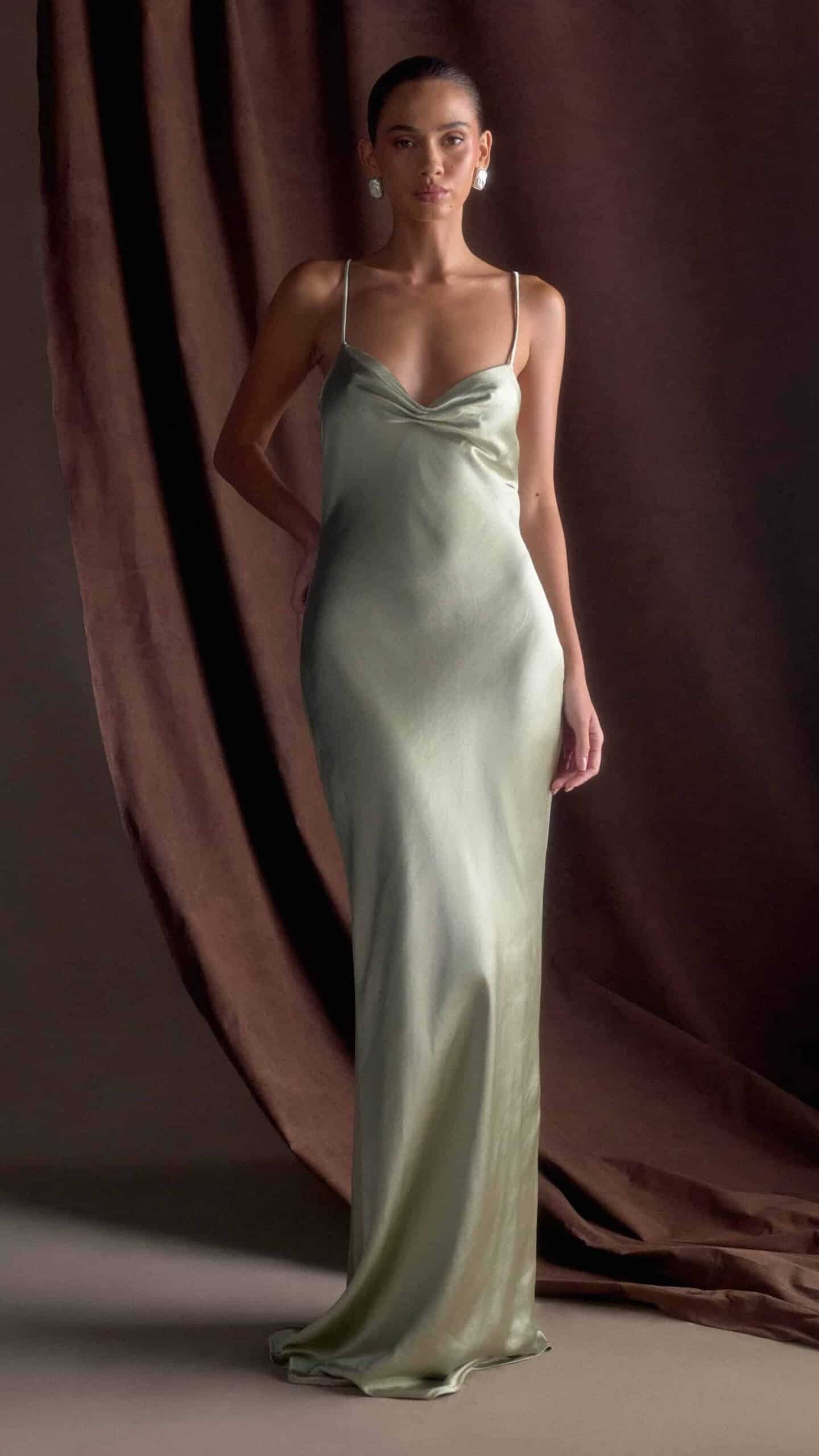
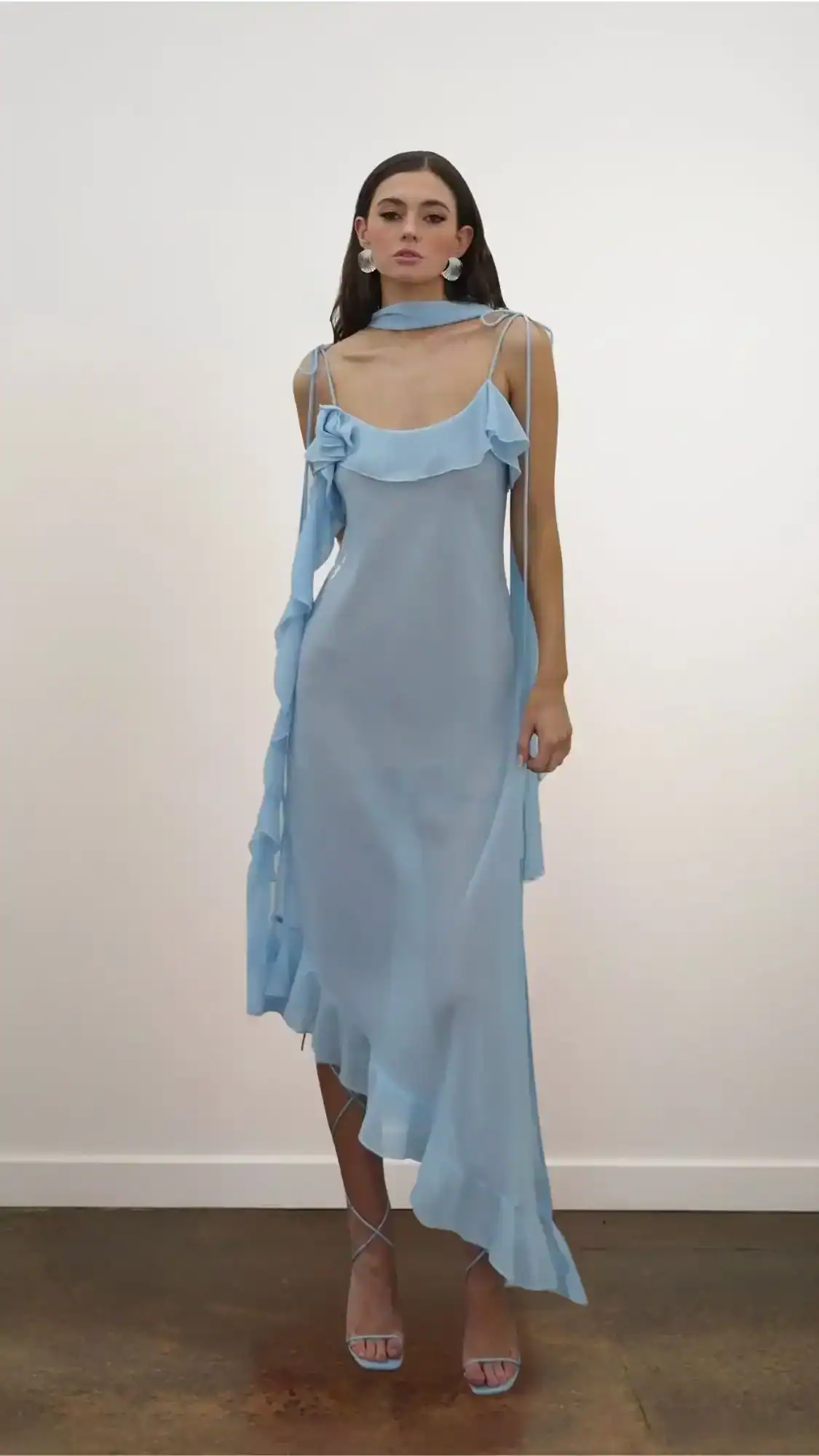
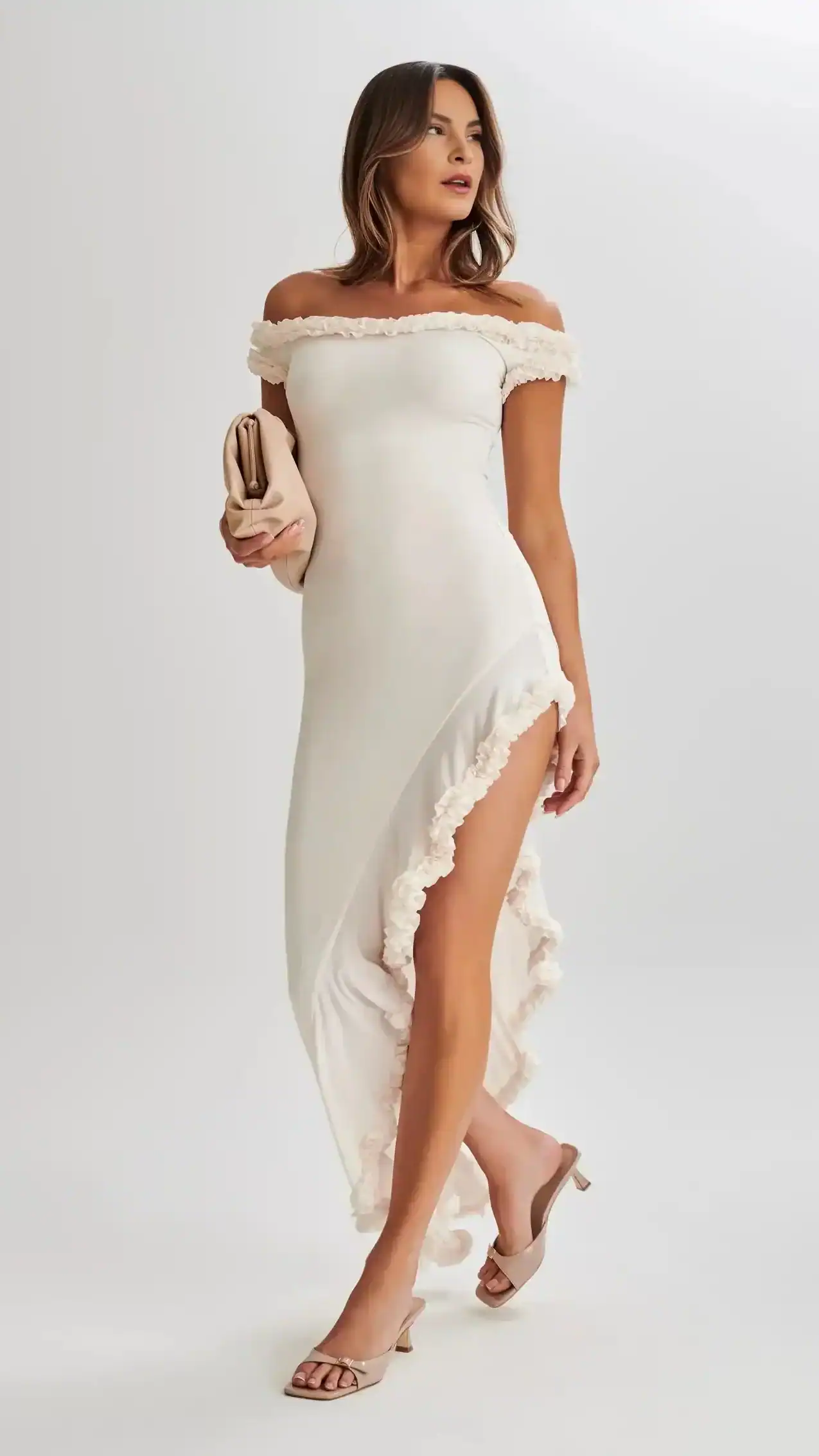
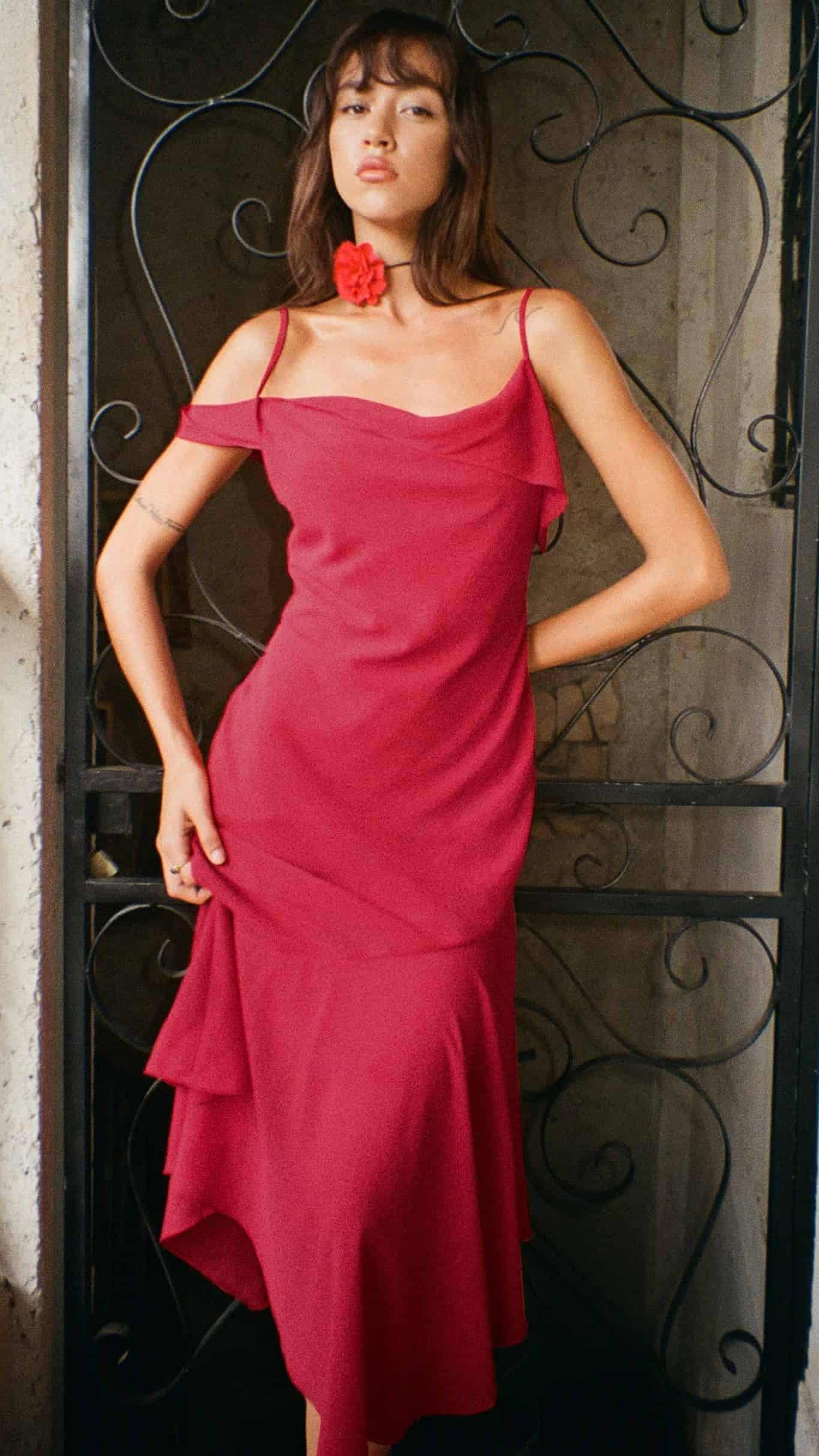
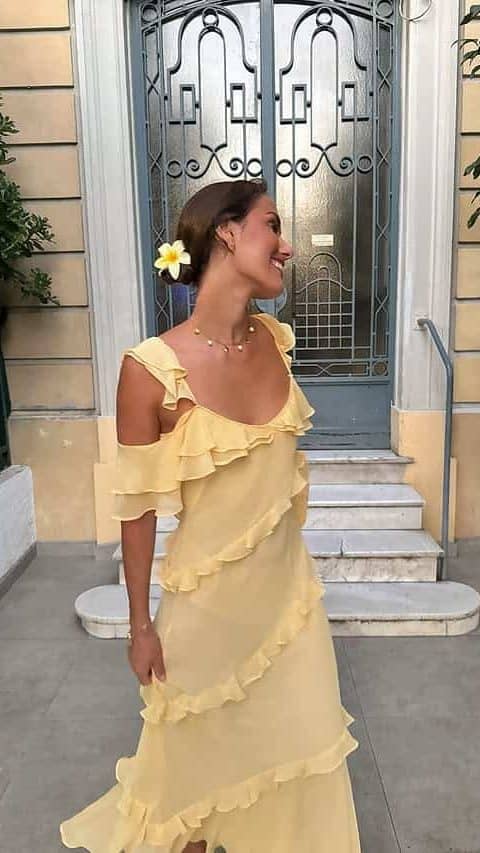
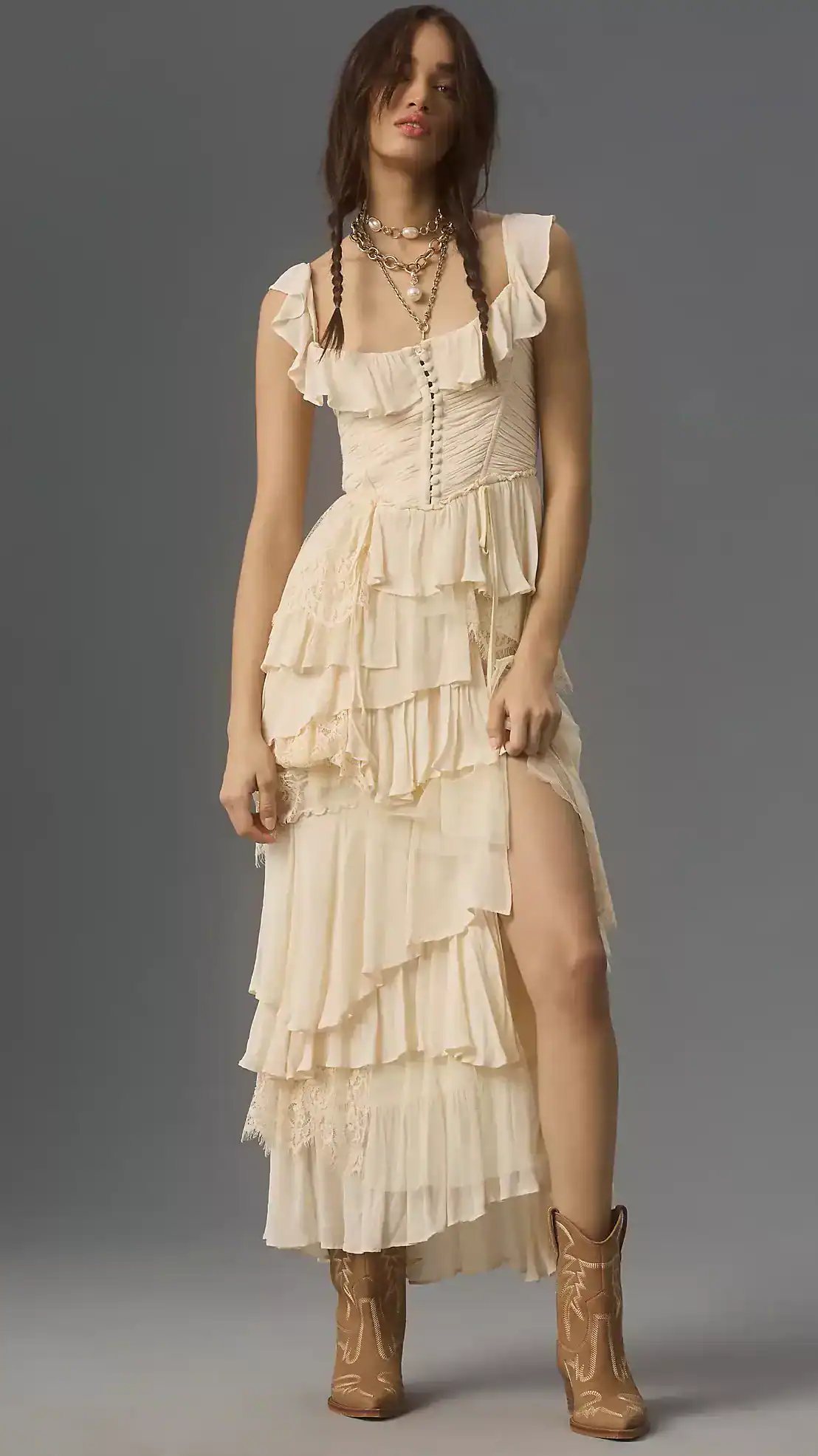
I had to decide on one style, so in the end, I picked one that stood out the most to me. It was simple, but not too simple, elegant, and did not seem too impossible to make.
The fabrics
My priorities were simple: I wanted natural fabric, nothing synthetic, and nothing animal-derived.
What I kept getting offered: silk, polyester, or mystery blends.
Every tailor I spoke to offered either silk (beautiful, yes, but not vegan) or polyester (a hard no, it’s derived from petroleum, sheds microplastics every time it’s washed, and takes over 200 years to break down). I kept explaining what I was looking for and kept hitting the same wall.
Eventually, at Yaly Couture (one of the most established tailor shops in Hoi An, which I didn’t realise at the time), I found viscose fabric.
The confusion
I asked if it was 100% viscose, but they told me there was some silk inside, too. I said I didn’t want silk, so they quickly assured me that it was just a small amount and it was “artificial silk.” Not real silk, not polyester either.
This made me confused. I didn’t understand what that meant. After research, I found it’s most likely just another name for viscose; the fabric was invented in the early 1900s as a cheaper silk alternative, and in parts of Asia, the terms are still used interchangeably.
But there’s also a chance it was a small actual silk blend, and they downplayed it after I said I didn’t want silk. I genuinely can’t know for certain without a proper fabric composition test.
What I can say is that it wasn’t polyester; they confirmed that, plus the fabric’s feel and drape back it up.
But the full picture remained unclear, and I think that ambiguity is worth naming. It’s exactly the kind of fabric transparency problem that makes sustainable fashion so frustrating to navigate in practice sometimes.
In the end, I said yes to it. It was the closest thing I could find to what I wanted.
But I also wanted to be honest about what viscose actually is, because it’s not the cleanest answer either.
Viscose vs. polyester
Polyester is fully synthetic, made from petroleum. Its production is energy-intensive, it releases greenhouse gases, and it doesn’t biodegrade. It can sit in a landfill for hundreds of years.
Every time you wash a polyester garment, it sheds microplastic fibres that end up in waterways and eventually the ocean. It is one of the worst fabric options available.
Viscose (also called rayon) is plant-based, made from wood pulp, usually from trees like beech or eucalyptus, which means it’s biodegradable. It also doesn’t shed microplastics. So far, so good. And it has a silk-like drape and feel, which is why it’s often positioned as a silk alternative.
But sadly, the production process is chemically intensive, involving a toxic substance called carbon disulfide.
It’s also resource-heavy: producing a single ton of viscose uses around 30 tons of water. And the wood pulp sourcing raises deforestation concerns, particularly when it comes from poorly managed forests.
So viscose is better than polyester, but it’s far from a clean option. The more sustainable versions of cellulosic fibres are lyocell (sold as TENCEL), which is produced using closed-loop systems that recycle chemicals and reduce waste.
Unfortunately, though, those were not available anywhere I looked.
My struggle
Here’s the part I’ve been thinking about the most.
I write about sustainability and sustainable fashion. I even have an e-book about it.
I wish I could write you a perfect guide where I found the ideal fabric, ticked every sustainability box, and walked away completely at peace. But that’s not what happened. The reality is that I had to compromise.
That whole thing made me feel quite phony. Like I’m performing sustainability rather than living it.
But I’ve also been sitting with the alternative question: what would the “perfectly sustainable” wedding dress have looked like?
- Buying secondhand – hard to find my size or a style that feels right
- Renting – I’m not looking for a ‘classical’ wedding dress, and it’s not something that feels meaningful
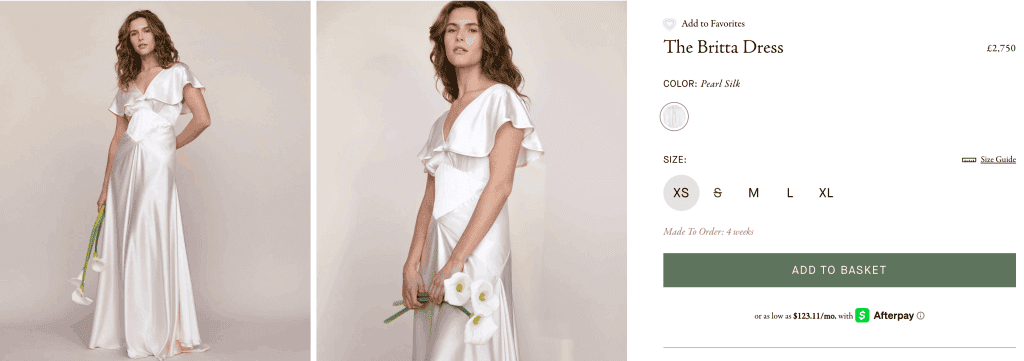
- A certified sustainable brand – I looked into many options, and I did not like any of them. I couldn’t know how the fit would be without trying it, too, and the prices were way too high for my budget (+ many were made out of silk)
None of those felt right.
After years of trying to live sustainably and writing about sustainability, I realize over and over again that it is not perfect. It’s a series of choices made with imperfect information and real constraints.
You do the best you can with what’s actually available to you, not some ideal version that doesn’t exist.
What I was happy about
For all the discomfort around the fabric, there are things I’m proud of about this dress.
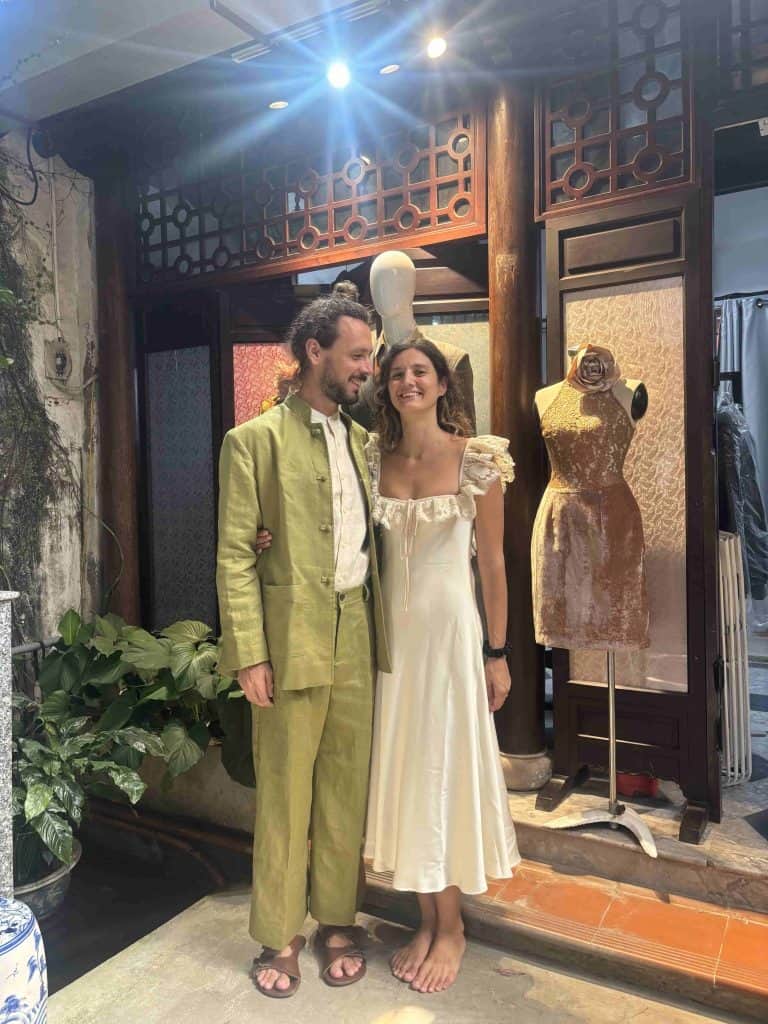
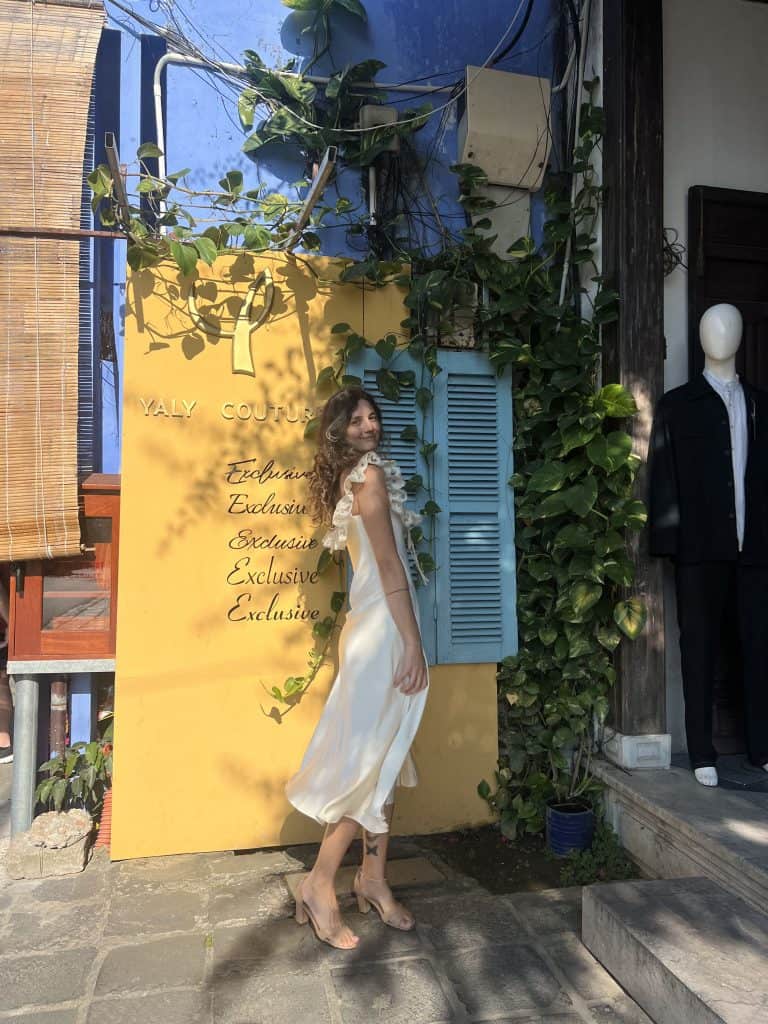
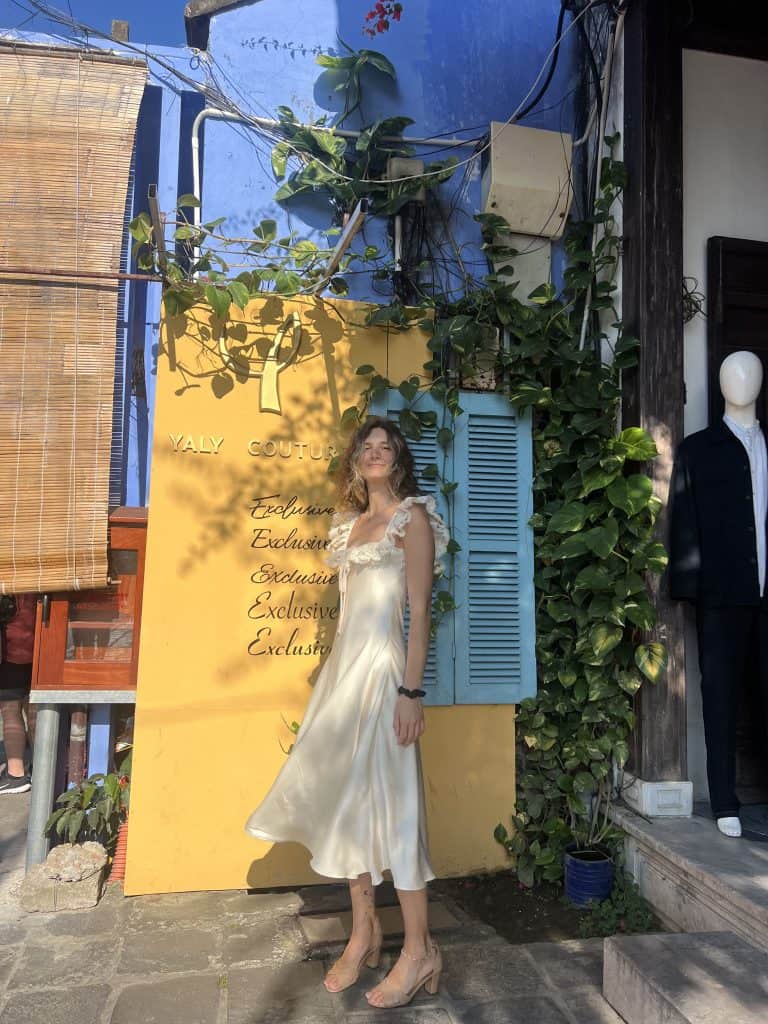
The design makes it wearable. I deliberately chose something that doesn’t look like a typical wedding dress. The color is pale yellow, which means it works outside of a wedding context too. I fully intend to wear this dress again. The average wedding dress is worn once and then stored, donated, or thrown away. A garment you wear many times over many years is inherently more sustainable than one you wear once, whatever it’s made of.
Made-to-order means no overproduction. This dress was made specifically for me, to my measurements and my design. No surplus, no unsold stock sitting in a warehouse.
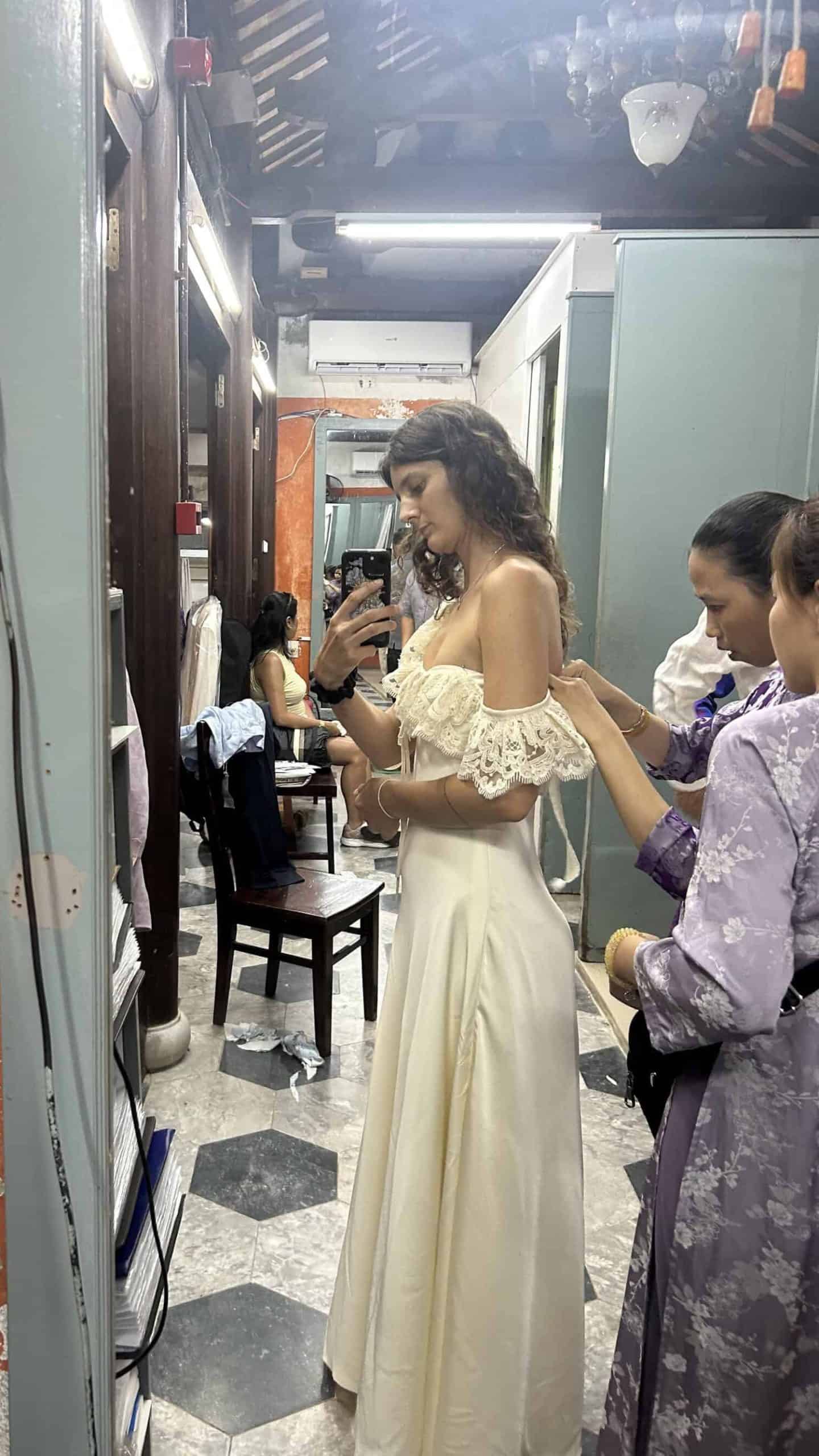
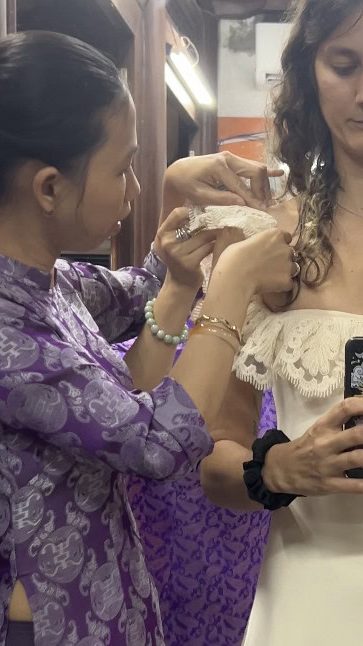
It was made by skilled people at a local business I ended up trusting. Yaly Couture employs 300 artisans and has been part of Hoi An’s tailoring tradition for years. Yes, it’s one of the bigger and better-known shops. I paid slightly more than I would have at a smaller place, but the results were excellent. Three fittings, precise adjustments, and a dress I love.
It costs a fraction of what a Western wedding dress costs. A comparable dress from a European bridal boutique would run into thousands of euros. Mine cost a small fraction of that, still much cheaper even accounting for travel, and the fit is better than anything off a rack would have been.
His suit
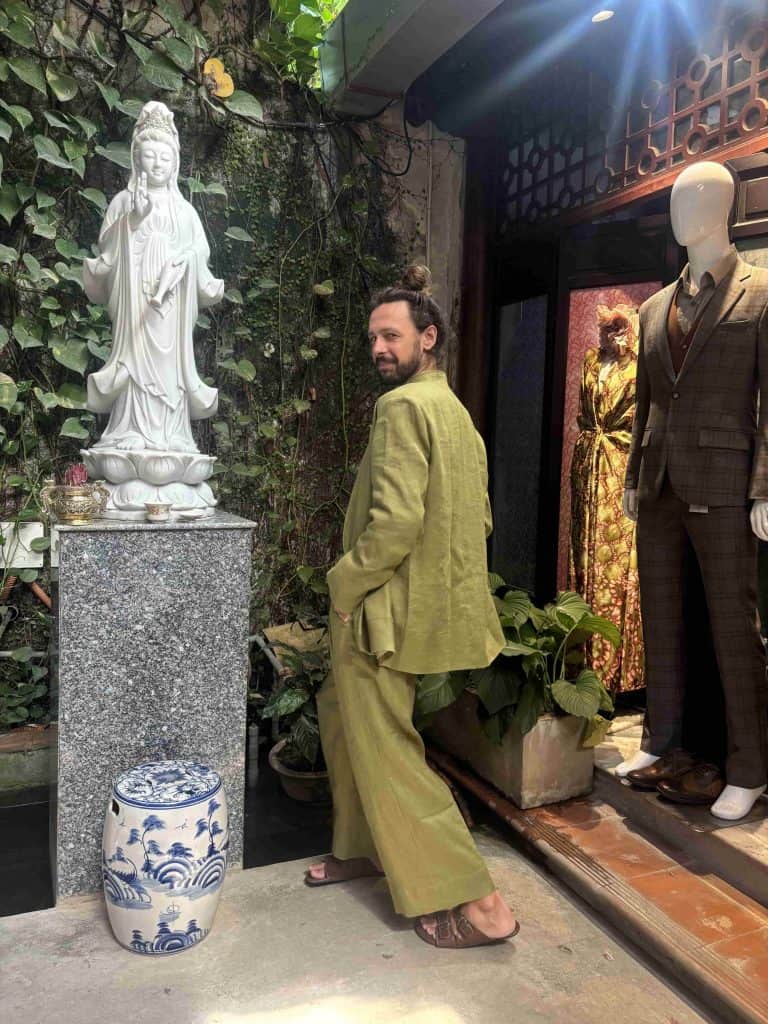
My partner’s experience was notably less complicated than mine: he went full linen, and linen is one of the good fabric options.
Linen is made from the flax plant, which grows with minimal water (largely from rainfall), little to no pesticides or synthetic fertilisers, and actually improves soil quality rather than depleting it.
The processing is largely mechanical rather than chemical. It’s fully biodegradable, it doesn’t shed microplastics, and it gets softer with every wash rather than degrading. It’s one of the oldest textiles in the world for good reason.
He went with olive green; not a traditional wedding color, but that was the point. He wanted something he’d actually wear again, and he will. The suit was made in the same shop. Linen was readily available without having to search for it, the way I had to search for anything vegan and non-synthetic for my dress.
The contrast between our two experiences is kind of a microcosm of the fabric transparency problem. He wanted linen; linen was there. I wanted something plant-based and vegan; the shop pushed silk and polyester, and finding a middle-ground option took real effort and still left me uncertain.
Tips for making your wedding clothes in Vietnam
In case you are planning to make your wedding clothes in Vietnam, here are a few tips:
Be very specific about what you want and don’t want from the start. “Natural fabric” isn’t enough. Say: I don’t want polyester, I don’t want silk, I’m looking for linen, cotton, or a plant-based alternative. The more specific you are, the better.
Ask directly what fabrics are made of, and keep asking. I asked multiple questions and still came away uncertain. That’s partly a language barrier issue, partly a fabric labelling issue. Ask for clarity, and if you can, ask to see any tags or certifications on the fabric bolt.
Linen is your safest bet. It’s widely available, the sustainability credentials are solid, and it works beautifully for both structured garments like suits and softer pieces like dresses. If you can make linen work for your design, do it.
Think carefully about rewearability from the start. This is the single biggest sustainability decision you can make about a wedding outfit. A dress or suit you wear five more times over the next decade has a completely different environmental footprint than one that goes into storage after the wedding.
Choose a shop you trust. I ended up at Yaly Couture almost by accident, not realising how well-established they were. But I’m glad I did. The skill level matters enormously for making something important, like a wedding dress, and it took just three fittings to get it right.
Consider bringing your own fabric if you can find something you trust. On other pieces during our trip, we sourced fabric from a separate market and brought it to the tailor. For a wedding dress, this felt too risky logistically, but if you have more time and flexibility, it’s a real option for controlling what you’re actually wearing.
Final thoughts
We made the dress in April, and the wedding is in August, so I haven’t worn the dress yet.
And while it isn’t “perfect” from a sustainability point of view, I am happy with the result, I think it looks beautiful, and I’m excited to wear it on the day & after.
The whole fabric question still makes me feel a little uncomfortable, but I’ve stopped thinking that discomfort means I did something wrong.
It was the option I had, and at the end of the day, I know I did everything I could to make it the best possible.
I’m curious about your thoughts – would you have done something differently? And if you’ve already been through wedding planning, what did you choose for your outfit? I’d love to know.
P.S. Yeah, we aren’t supposed to see each other with our wedding outfits before the wedding, but… we both needed someone to help with decisions, and also, we got too excited, sooo here’s a pic of both of us. 😀