DIY Vegan Lip Balm: 3 Easy Recipes + No Beeswax (2026)
This post and the photos within it may contain affiliate links. If you purchase something through the link, I may receive a commission at no extra charge to you.
Most lip balms feel great for about two minutes… and then your lips somehow end up drier than before, and I always didn’t like it. So, I decided to make DIY lip balm, and I started experimenting.
Some batches turned out grainy, got too solid, melted in my bag, or felt like I’d smeared candle wax on my lips.
Eventually, I found a formula that actually works. It’s soft, nourishing, and made entirely from plant-based ingredients.
No beeswax, no petroleum, and no plastic tubes. Just simple oils, a pinch of candelilla wax for structure, and whatever scent or tint you like.
Below, I’ll share my favorite 3 recipes and all the tips I’ve collected, so you can create your own easily.

Why make your own lip balm?
Store-bought balms often use beeswax or synthetic waxes that coat your lips instead of moisturising them. Making your own lets you:
- Use fully vegan, cruelty-free ingredients
- Customise the scent, color, and texture
- Avoid petroleum, silicones, and preservatives
- Reuse tins or small jars
- Create a balm that hydrates instead of drying out
It’s simple, fast, and satisfying.
Why these vegan lip balms work
The secret to a good vegan lip balm is balance. Too much wax and lips feel coated and dry. Too much oil and the balm melts or disappears instantly. These recipes work because they use a simple, well-tested mix of oils and waxes that soften the lips instead of just sealing them.
Here’s what each ingredient does, across all three versions:
- Castor oil → Adds shine, cushion, and staying power. It’s thicker than most oils, which helps the balm feel nourishing instead of watery.
- Almond oil → Lightweight, gentle, and fast-absorbing. It softens the lips and improves glide without feeling greasy. (Used in the base and chocolate versions.)
- Candelilla wax → A vegan alternative to beeswax. It gives structure and keeps the balm solid, but in small amounts, so it never feels heavy or draggy.
- Cocoa butter → Used in the chocolate version only. It adds a natural cocoa scent and a slightly firmer, creamy texture without needing much wax.
- Coconut oil → Used in the coconut version. It creates a soft, melty, glossy feel and makes the balm more butter-like and summery.
- Vitamin E oil → Helps slow oxidation so the oils stay fresh longer. It also adds a little extra nourishment for dry lips.
- Essential or fragrance oils (optional) → Used in very small amounts for scent (mint, vanilla, or sweet orange). These are optional and can be skipped if you prefer an unscented balm.
- Mica powder (optional) → Adds shimmer or a subtle tint. A tiny amount is enough, and it’s easy to customise the look. I used silver mica and bronze mica for the recipes below.
With the right ratios, these balms melt on contact, absorb into the lips instead of sitting on top, and don’t create that uncomfortable “addicted-to-reapplying” feeling that many commercial lip balms cause.
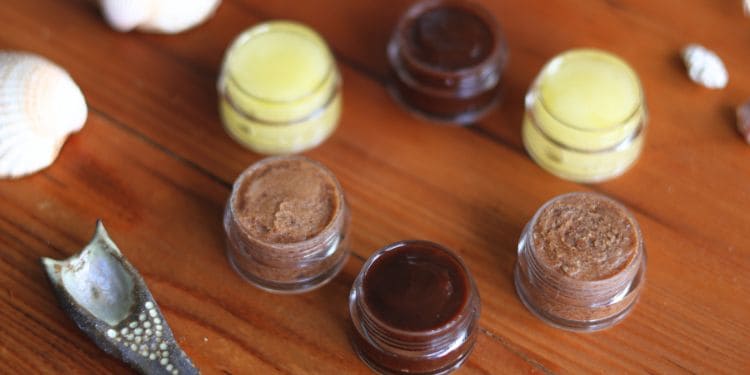
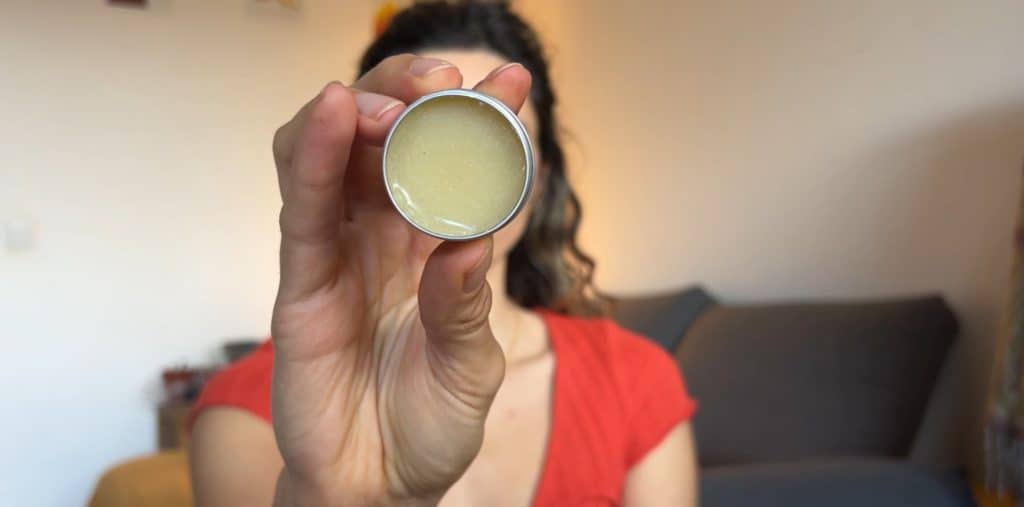
Fresh minty lip balm
Gentle, nourishing, and great for everyday use.
Makes: about 3-4 small tins (around 55ml total)
Shelf life: 6–12 months (store cool and dry)
Ingredients
- 4 g candelilla wax
- 20 ml castor oil
- 30 ml almond oil
- 10 drops of vitamin E
- 2 drops of mint essential oil (optional)
- 0.3 g silver mica powder (tiny pinch for shimmer, optional)
How to make it
- Add the castor oil, almond oil, and candelilla wax to a heatproof bowl.
- Melt everything slowly over a double boiler (low heat works best).
- Once the wax is fully melted, remove the bowl from the heat.
- Let the mixture cool for 30-60 seconds, so it isn’t piping hot.
- In a tiny dish, mix mica powder with a few drops of almond oil to make a smooth paste, so there are no clumps. (I skipped this step and didn’t have problems with clumps)
- Stir in the vitamin E, essential oil, and the mica paste.
- Mix well for about 20-30 seconds so everything blends evenly.
- Pour the mixture into clean tins.
- Leave it to set at room temperature until fully solid.
- Once cooled, close and store your balm in a dry, cool spot.
Choco lip balm
This version uses cocoa butter for the chocolate scent and a small amount of candelilla wax for structure. The result is a soft balm that still holds its shape.

Ingredients
- 2 g candelilla wax
- 4 g cocoa butter
- 20 ml castor oil
- 30 ml almond oil
- 10 drops of vitamin E oil
- 2-3 drops of vanilla fragrance oil (optional, deepens the chocolate smell)
- ½ pinch sparkly pink, brown, or bronze mica
How to make it
- Add castor oil, almond oil, cocoa butter, and candelilla wax to a heatproof bowl.
- Melt everything slowly over a double boiler on low heat.
- Once fully melted, remove the bowl from the heat.
- Let it cool for 30–60 seconds.
- Stir in the vitamin E and vanilla extract.
- Add your mica and mix well.
- Pour the balm into clean tins.
- Leave it to set at room temperature until fully solid.
Coconut lip balm
This soft lip butter melts instantly and feels super nourishing on the lips. The mix of coconut oil and castor oil gives it a smooth, glossy finish, while sweet orange essential oil adds a sunny, tropical scent. It’s perfect for tins and ideal for warmer days.

Ingredients
- 3 g candelilla wax
- 20 ml coconut oil
- 20 ml castor oil
- 10 drops of vitamin E
- 2-3 drops sweet orange essential oil (optional)
- A small pinch of silver mica powder (optional, for shimmer)
How to make it
- Add the castor oil, coconut oil, and candelilla wax to a heatproof bowl.
- Melt everything slowly over a double boiler.
- Once fully melted, remove from heat and let it cool for 30–60 seconds.
- If you’re using mica, mix it with a few drops of oil in a small dish until smooth.
- Stir in the vitamin E, sweet orange essential oil, and the mica paste (if using).
- Mix well for about 20–30 seconds so everything blends evenly.
- Pour into small tins and let it set at room temperature until fully solid.

Ingredient swaps & alternatives
Oils
You can swap almond oil with other liquid oils, but expect slight texture changes:
- Jojoba oil → more stable, slightly thicker, less “melty”
- Apricot kernel oil → very similar to almond, soft and lightweight
- Olive oil → richer and heavier, best used if you like a more nourishing feel
These swaps are fairly forgiving, but the balm may feel a bit lighter or richer depending on the oil.
Essential oils
Essential oils are completely optional.
- Lavender → calming, soft scent
- Sweet orange → light, fresh, uplifting
- No essential oil → perfectly fine for sensitive lips
Always use very small amounts, especially in lip products.
Wax
I would stick to candelilla wax for this recipe. All 3 versions were tested and adjusted using candelilla, and it’s the reason the balms feel soft, smooth, and not overly waxy. You can use a different wax if you really want to, but it won’t be a 1:1 swap.
- Carnauba wax is much harder than candelilla. You’ll need to use less, and even then, the balm will likely feel firmer and less creamy.
- Soy wax is much softer. You’ll need to use more, and the balm may turn out creamier and less stable.
If you decide to swap the wax, I recommend making a small test batch first and adjusting slowly. The texture will not be identical to the recipe here, and I can’t promise it will turn out as smooth or balanced.
Texture troubleshooting
- Too hard → Too much wax. Solution: Remelt and add a tiny splash of oil (10-20 drops).
- Too soft → Too little wax. Solution: Remelt and add a pea-sized amount of wax.
- Gritty texture → Overheated. Solution: Heat gently and cool slowly.
- Clumps → Mica powder not pre-mixed. Solution: → Pre-mix mica powder with oil before adding.

FAQs
How long does it last on the lips?
These balms absorb into the lips instead of forming a heavy layer, so expect around 1-2 hours of wear before reapplying. Hydration lasts longer than the shine.
What’s the shelf life of these DIY lip balms?
6-12 months if stored somewhere cool and dry.
Do I need essential oils?
Not at all. Every version works great unscented.
Tube or tin?
Tins are best for softer formulas. Use tubes only for firmer versions (higher wax).

DIY Lip Balm - 3 Ways
3 easy, hydrating vegan lip balm recipes made without beeswax. Each balm gives a unique texture and scent, and they’re all simple to adjust to match the scent & feel you like.
Ingredients
Fresh minty lip balm
- 4 g candelilla wax
- 20 ml castor oil
- 30 ml almond oil
- 10 drops of vitamin E
- 2-3 drops of mint essential oil
- 0.3 g mica powder (tiny pinch for shimmer, optional)
Choco lip balm
- 2 g candelilla wax
- 4 g cocoa butter
- 20 ml castor oil
- 30 ml almond oil
- 10 drops of vitamin E
- 2-3 drops of vanilla fragrance oil (optional, deepens the chocolate smell)
- ½ pinch sparkly red, brown or pink mica (optional)
Coconut lip balm
- 3 g candelilla wax
- 20 ml coconut oil
- 20 ml castor oil
- 10 drops of vitamin E
- 2-3 drops sweet orange essential oil (optional)
- A small pinch of mica powder (optional, for shimmer)
Instructions
- Add your base ingredients to a heatproof bowl. For the mint balm, candelilla wax + castor oil + almond oil. For the choco balms, candelilla wax + cocoa butter + castor oil + almond oil. For the coconut balm, candelilla wax + coconut oil + castor oil.
- Melt everything slowly over a double boiler. Low heat works best, as it prevents the oils from overheating and allows the wax to melt evenly.
- Once fully melted, remove the bowl from the heat.
- Let the mixture cool for 30-40 seconds, so it isn’t piping hot. This helps protect the vitamin E and essential oils.
- If you’re using mica powder: Add it directly into the bowl, or in a tiny dish, mix a small pinch of mica with a few drops of oil (almond or coconut) to make a smooth paste. This prevents clumps, though you can skip the paste step if your mica blends easily.
- Add your extras: Mix well for about 20-30 seconds so everything combines evenly.
- Pour the mixture into clean tins or small reusable containers.
- Let it sit at room temperature until fully solid.
- Once cooled, close and store your lip balms in a dry, cool spot.
Notes
Ingredient swaps & alternatives
Texture troubleshooting
Final thoughts
Once you make your own lip balm, it’s hard to go back.
This formula is simple, reliable, and best of all, you can adjust everything: scent, color, shine, firmness, until it fits exactly what you like. All three recipes are simple, fully vegan, and easy to customise based on the ingredients you have.
If you try any of these versions, feel free to share! I’d love to see what you make. (: